


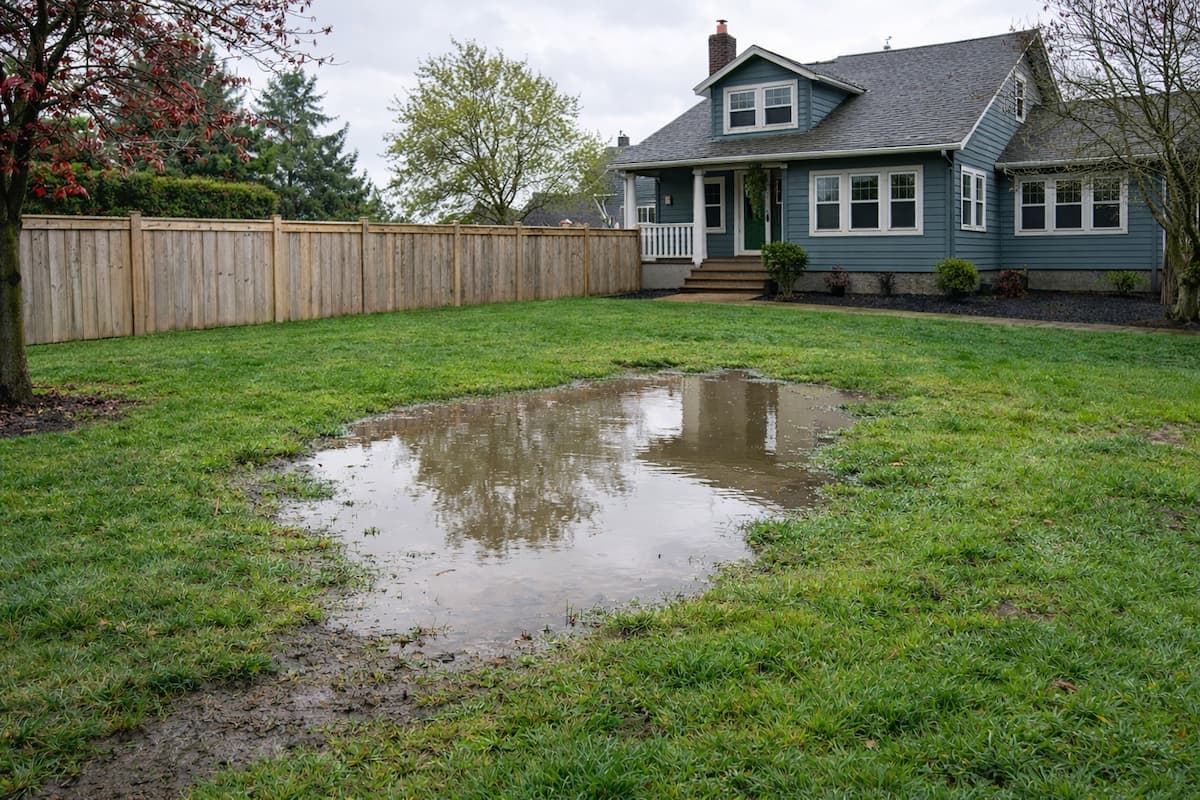
 At first glance, the problem seems simple.
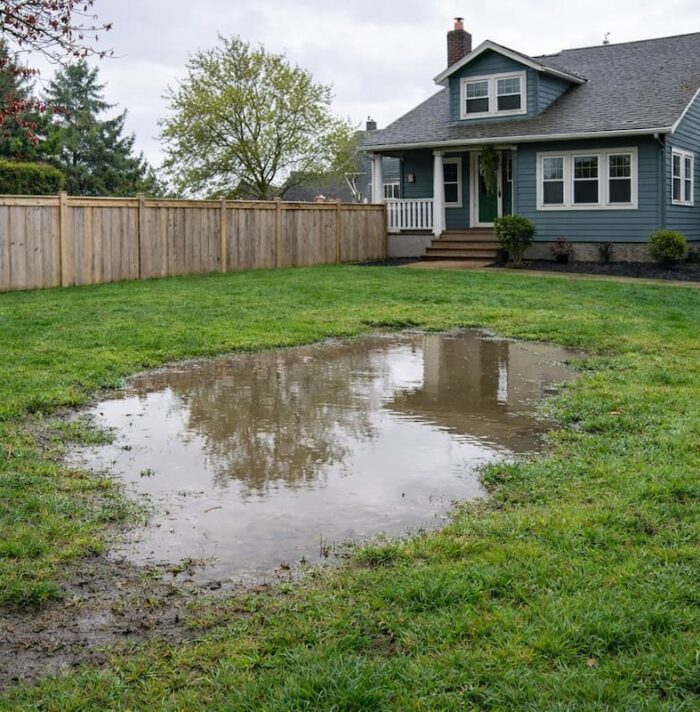
Your yard looks uneven. Maybe water pools after it rains, or one area feels lower every year. You start searching for answers and quickly run into two terms that sound almost identical: grading and leveling.
They’re often used interchangeably—but they’re not the same thing.
And choosing the wrong solution is one of the main reasons yard problems keep coming back.
So let’s clear it up.
Why “Grading” and “Leveling” Are Often Confused
Both grading and leveling deal with how your yard sits, but they solve very different problems.
Most DIY articles focus on surface fixes. They talk about adding soil, smoothing low spots, and making the lawn look even again. That approach works in some cases—but not all.
In Oregon, where rainfall, soil saturation, and slopes are common, understanding the difference between grading and leveling is critical if you want results that last.
What Yard Leveling Actually Means
Leveling is a surface correction.
It’s typically used when:
- Small areas of the lawn have settled
- Minor low spots have developed
- The yard is mostly flat but not perfectly even
Leveling focuses on filling and smoothing the surface so it feels and looks uniform again. When drainage is already working properly and the soil underneath is stable, leveling can be an effective and affordable solution.
The key word here is minor.
What Yard Grading Really Involves
Grading, on the other hand, is about shaping the land to control water flow and stability.
Grading is usually necessary when:
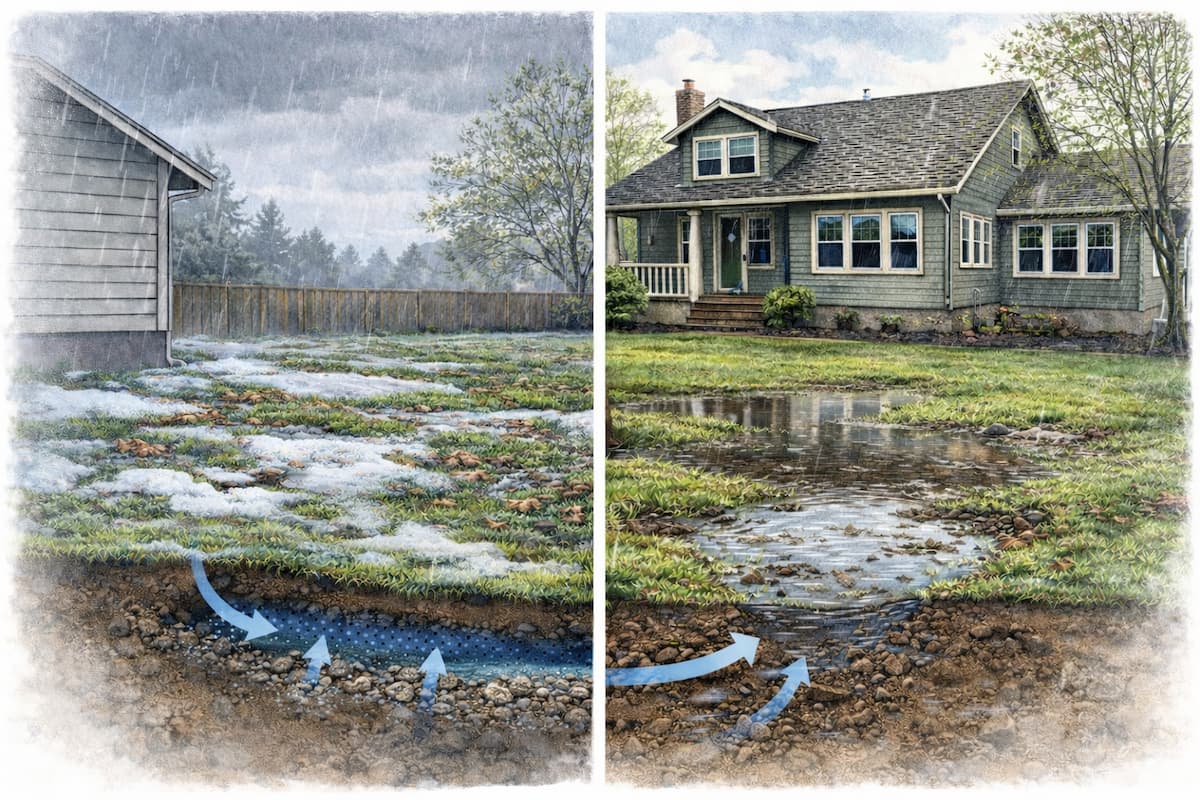
- Water consistently pools in certain areas
- The yard slopes toward the house
- Soil erosion is visible after heavy rain
- Previous leveling attempts didn’t last
- The yard has noticeable elevation changes
Instead of fixing the surface, grading addresses what’s happening under and across the yard as a whole. Its goal is to move water away from structures, stabilize soil, and prevent long-term damage.
Why Choosing the Wrong Solution Causes Repeat Problems
This is where many homeowners get frustrated.
If a yard needs grading but only gets leveled, the surface may look better for a short time. But once rain returns, water follows the same path, soil shifts again, and the problem reappears.
In Oregon’s climate, this cycle is common. Water doesn’t just sit—it moves, reshapes soil, and finds weak points. That’s why surface fixes alone often fail when drainage and slope aren’t addressed.
Why “Grading” and “Leveling” Are Often Confused
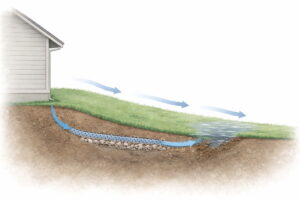 Drainage is the connection point between grading and leveling.
Good drainage supports leveling by keeping soil stable. Poor drainage undermines it. That’s why grading projects often include drainage solutions, even when the original concern looked like a simple uneven yard.
Without managing water flow, neither grading nor leveling will perform as intended long term.
How to Tell Which Your Yard Needs
A simple rule of thumb helps clarify things:
- If the problem is cosmetic and localized, leveling may be enough.
- If the problem is recurring, widespread, or water-related, grading is usually the right solution.
Slopes, erosion, repeated settling, or water near foundations are all signs that the issue goes beyond surface appearance.
Why Professional Evaluation Matters for Grading Decisions
Grading isn’t just about moving dirt. It affects drainage patterns, neighboring areas of the yard, and sometimes even nearby properties.
A professional evaluation looks at:
- Overall slope
- Water entry and exit points
- Soil conditions
- Long-term impact of changes
This ensures the solution doesn’t simply move the problem somewhere else.
Final Thoughts: Fixing the Right Problem the First Time
Understanding the difference between grading and leveling can save homeowners a lot of time, effort, and repeated fixes.
Leveling improves appearance when conditions are right. Grading solves deeper problems related to water and stability. Choosing the right approach from the start is what makes the difference between a short-term improvement and a long-term solution.
In Oregon, where water and soil movement are constant factors, that distinction matters more than most people realize.
Not sure which solution your yard needs?
A proper assessment can clarify whether leveling will hold—or if grading and drainage adjustments are the smarter long-term choice.