


 Winter has a way of revealing things most homeowners don’t notice the rest of the year.
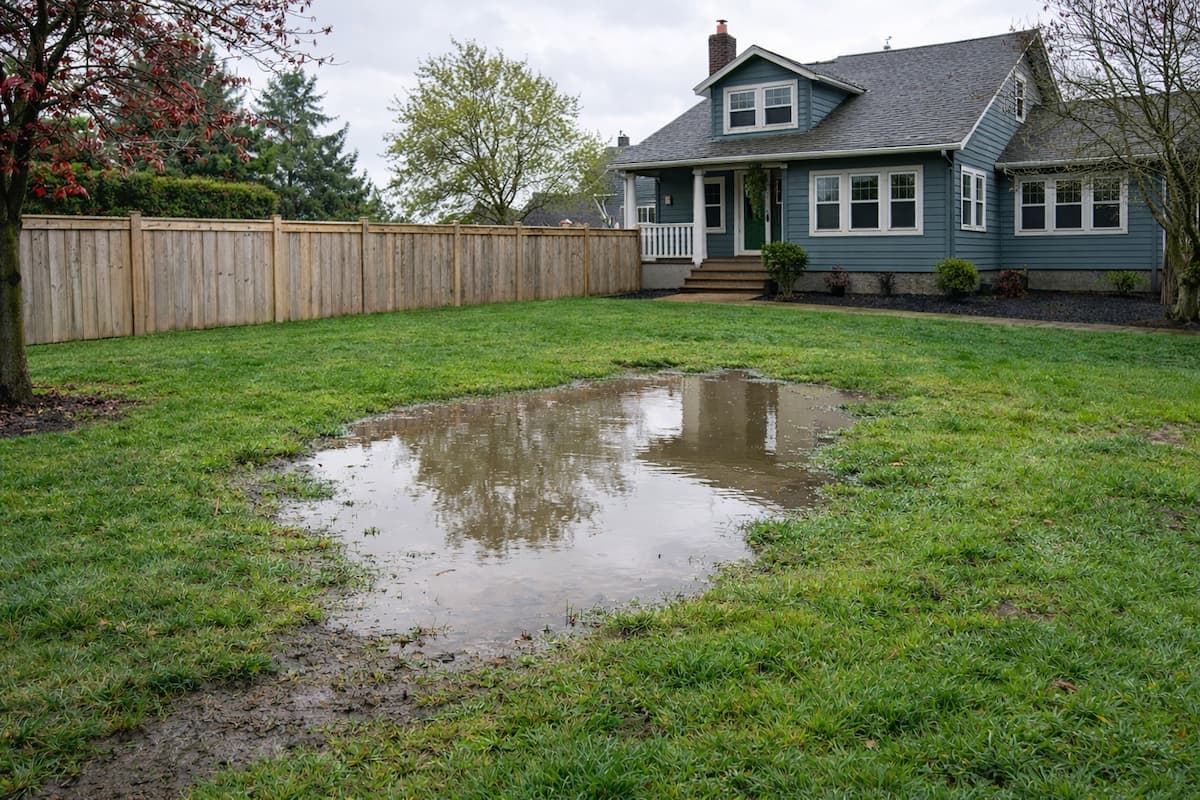
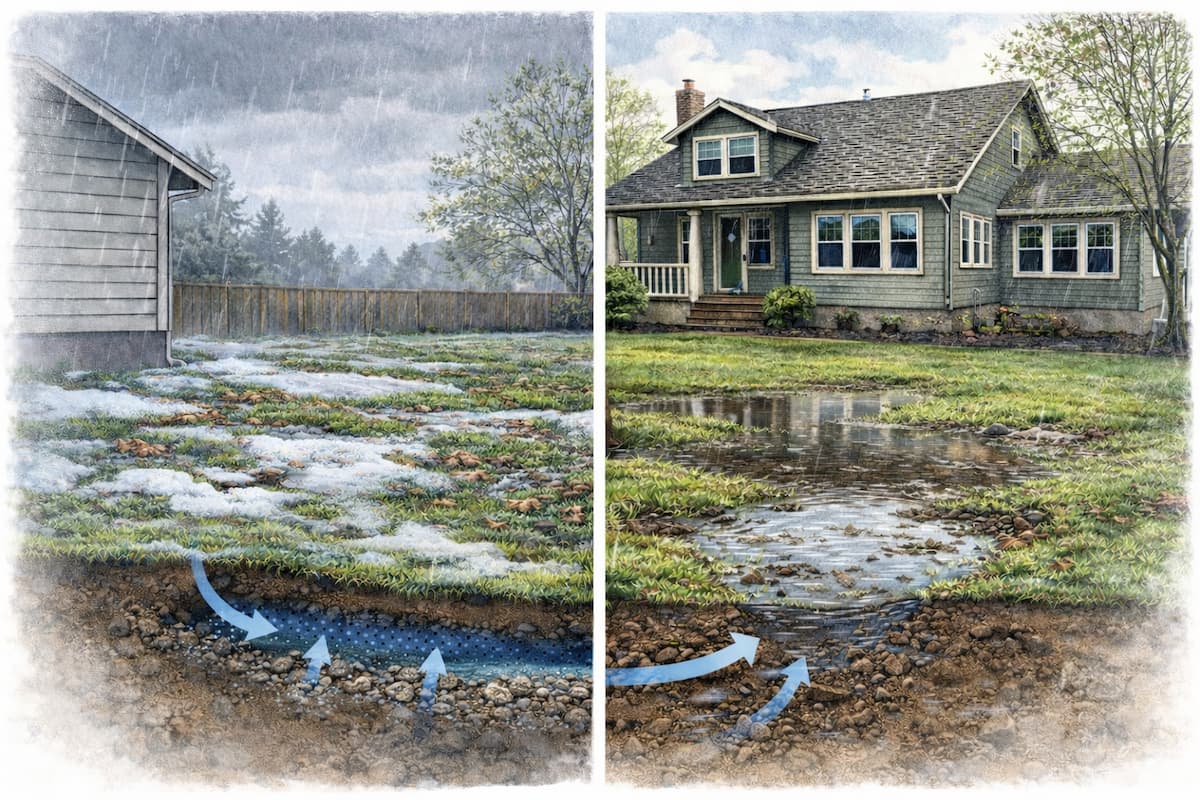
After weeks of steady rain, you may start to see water collecting in places it never did before. Soil shifts slightly. Parts of the yard stay muddy longer. Grass struggles, slopes soften, and small changes quietly add up.
Most of these issues don’t feel urgent in the moment. But in Oregon, winter yard problems are often the early warning signs of much bigger spring repairs.
The good news? Many of them can be prevented—if you know what to look for.
Why Winter Is a Diagnostic Season for Your Yard
Winter doesn’t usually create yard problems.
It exposes them.
Heavy rain, saturated soil, and limited drying time put stress on your landscape. Weak points become visible, drainage paths reveal themselves, and soil movement shows where the yard isn’t as stable as it should be.
Think of winter as a stress test. What holds up now is likely fine. What starts to fail is worth paying attention to.
Common Winter Yard Issues Homeowners Overlook
Some winter problems seem minor at first, but they rarely fix themselves.
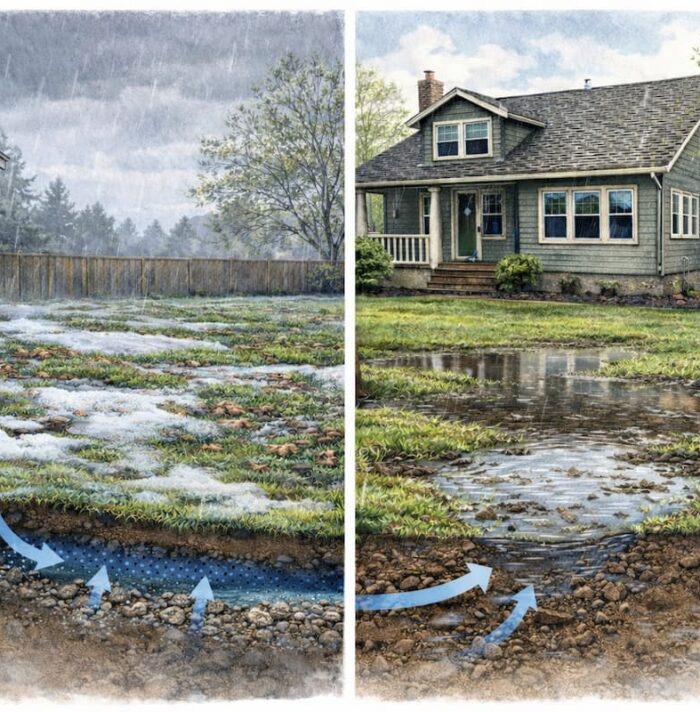
Pooling water is one of the most common signs. If water sits in the same areas after every storm, it usually points to drainage or grading issues beneath the surface.
Erosion is another red flag. Soil washing downhill, exposed roots, or changes in slope often mean water is moving faster than the yard can handle.
You may also notice uneven ground becoming more pronounced. Areas that felt “slightly off” in summer can become obvious once the soil is fully saturated.
How Small Winter Issues Become Big Spring Repairs
This is where timing matters.
When winter problems go unaddressed, spring brings:
- Continued soil movement
- Worsening erosion
- Damage to lawns and landscaping
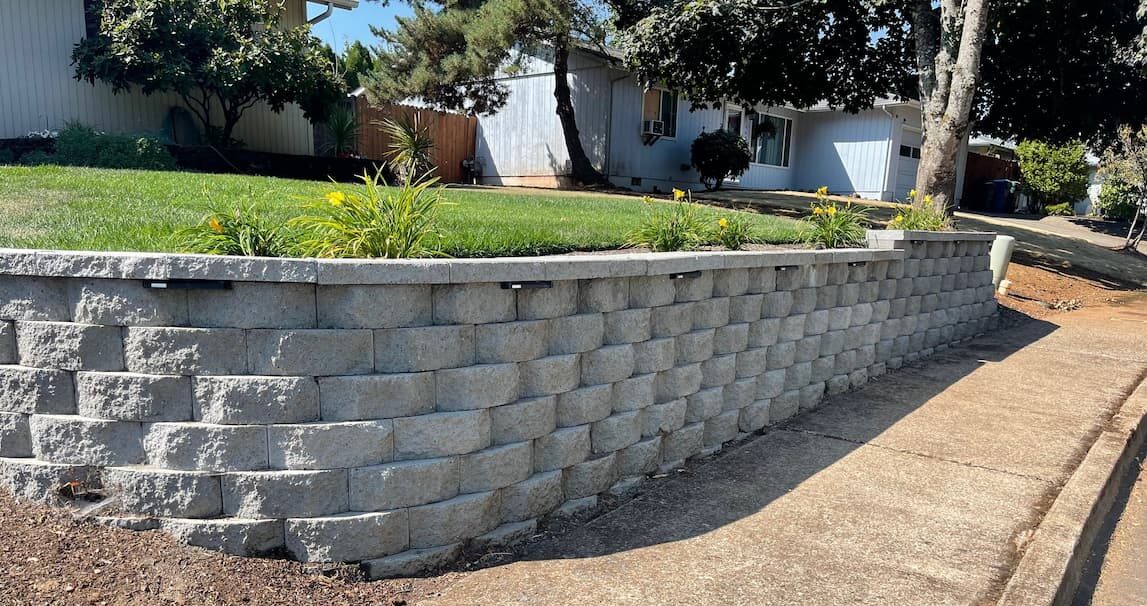
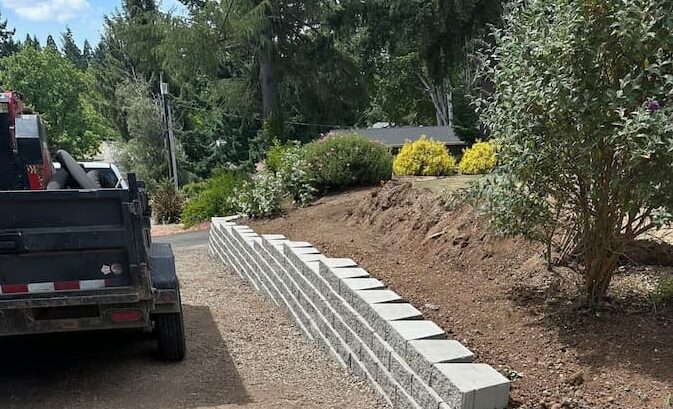
- Stress on retaining walls or foundations
- Higher repair costs once projects stack up
What could have been a targeted fix in winter often turns into a larger, more expensive project once the damage spreads.
In many cases, the repair itself isn’t more complicated—just more extensive.
The Role of Drainage in Preventing Spring Damage
Drainage is often the common thread behind winter yard problems.
If water doesn’t have a clear, controlled path away from your yard, it will create one on its own. That’s when soil shifts, slopes weaken, and surfaces stop holding their shape.
Addressing drainage early helps:
- Protect grading and leveling work
- Reduce erosion
- Preserve lawn health
- Prevent repeat repairs year after year
In Oregon’s climate, drainage isn’t optional—it’s foundational.
Why Waiting Until Spring Can Work Against You
Spring feels like the natural time to deal with yard issues, but it’s also when demand spikes.
By then:
- Contractors’ schedules fill quickly
- Problems may have worsened
- Temporary fixes are less effective
- Costs are often higher due to urgency
Winter and early planning stages allow for more thoughtful solutions instead of rushed decisions.
What You Can Do During Winter to Stay Ahead
You don’t need to start construction in the middle of the rainy season. But winter is the right time to:
- Observe how water moves through your yard
- Identify recurring problem areas
- Understand whether issues are cosmetic or structural
- Plan solutions before spring demand increases
A professional evaluation during this phase often leads to better outcomes and fewer surprises later.
Final Thoughts: Prevention Is Always Less Expensive Than Repair
 Most costly spring repairs don’t come out of nowhere. They start as small winter warning signs that were easy to overlook.
Paying attention now—while issues are visible—can help you protect your yard, your landscaping investment, and even your home itself.
In Oregon, winter isn’t just something to get through. It’s an opportunity to understand your property better and prepare for smarter, long-lasting solutions.
Noticing winter yard issues and unsure what they mean?
An early assessment can help determine whether simple adjustments will prevent spring repairs—or if a more proactive solution makes sense.