

A backyard remodel can completely change how your home looks, feels, and functions. Whether you’re planning a new patio, better drainage, a retaining wall, fresh turf, or a more usable outdoor living space, one thing matters more than many homeowners in the Willamette Valley realize:
The order of the work.
One of the most expensive mistakes in outdoor construction is installing the visible, “beautiful” part of the project first—only to find out later that drainage, grading, or structural support should have been handled before anything else.
That usually leads to one thing:
Paying twice.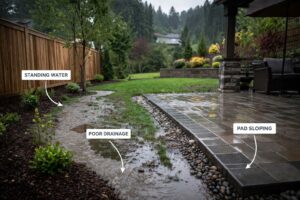
And here in the Willamette Valley, that matters even more.
From Salem to surrounding communities, backyard projects are often affected by a mix of:
- seasonal rain
- slope and runoff
- soft or shifting soil
- standing water
- drainage pressure around foundations and hardscape
That means a backyard remodel here is not just about design. It also has to be built to perform well in real local conditions.
In this guide, we’ll walk through the right order for a backyard remodel in the Willamette Valley and explain why many outdoor projects run into preventable problems long before homeowners realize what went wrong.
Why the Order of a Backyard Remodel Matters
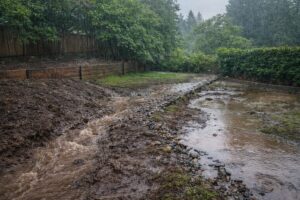 A backyard remodel is not just a design upgrade. It’s also a site performance project.
That means the goal is not only to make the space look better—it also needs to:
- Handle rainwater properly
- Stay level and stable
- Prevent erosion
- Support patios, pavers, and concrete
- Hold up through wet seasons in the Willamette Valley
That last part matters.
Because in this part of Oregon, even a beautiful backyard can develop problems if the underlying conditions were never addressed correctly.
When homeowners focus first on the “fun” part of the project—like pavers, concrete, turf, or decorative finishes—they sometimes skip the hidden work that protects everything underneath.
And unfortunately, the hidden work is often the part that matters most.
Common backyard remodel mistakes include:
- Installing a patio before correcting drainage
- Pouring concrete before fixing slope issues
- Adding pavers without proper base preparation
- Ignoring water flow near the home or foundation
- Delaying retaining wall work until after surface finishes are complete
These issues may not show up immediately. In many cases, the project looks great at first… until the first stretch of heavier rain exposes the weak points.
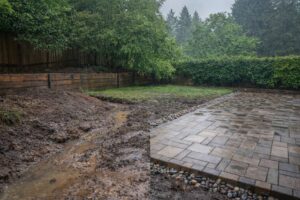
That’s when homeowners start noticing:
- standing water
- paver movement
- concrete settling
- erosion
- muddy edges
- or water collecting where it should never be
That’s why the smartest backyard remodels in the Willamette Valley start with the parts homeowners don’t always see.
The Right Order for a Backyard Remodel in the Willamette Valley
Every property is different, especially across the varied lot conditions found around Salem and the surrounding Willamette Valley, but in many cases, a well-planned backyard remodel should follow this sequence:
- Drainage and water control
- Grading and soil preparation
- Structural work like retaining walls
- Concrete, patios, pavers, and hardscape
- Turf, planting, and finishing details
Let’s break down why that order matters.
1. Start With Drainage and Water Control
If there’s one thing homeowners in the Willamette Valley should never treat as an afterthought, it’s water.
Even a beautiful backyard remodel can fail if backyard drainage and grading issues are never addressed before construction begins.
Before installing patios, walkways, turf, or decorative elements, it’s important to understand:
- Where rainwater naturally flows
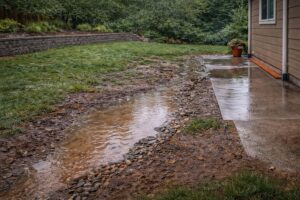
- Whether water collects near the home
- If there are low spots in the yard
- Whether runoff is affecting slope stability
- If surface water is washing out soil or creating muddy areas
This is especially important in the Salem area, where many properties deal with:
- winter saturation
- runoff from neighboring elevation changes
- low spots that stay wet longer than expected
- drainage issues that become obvious only after repeated rainfall
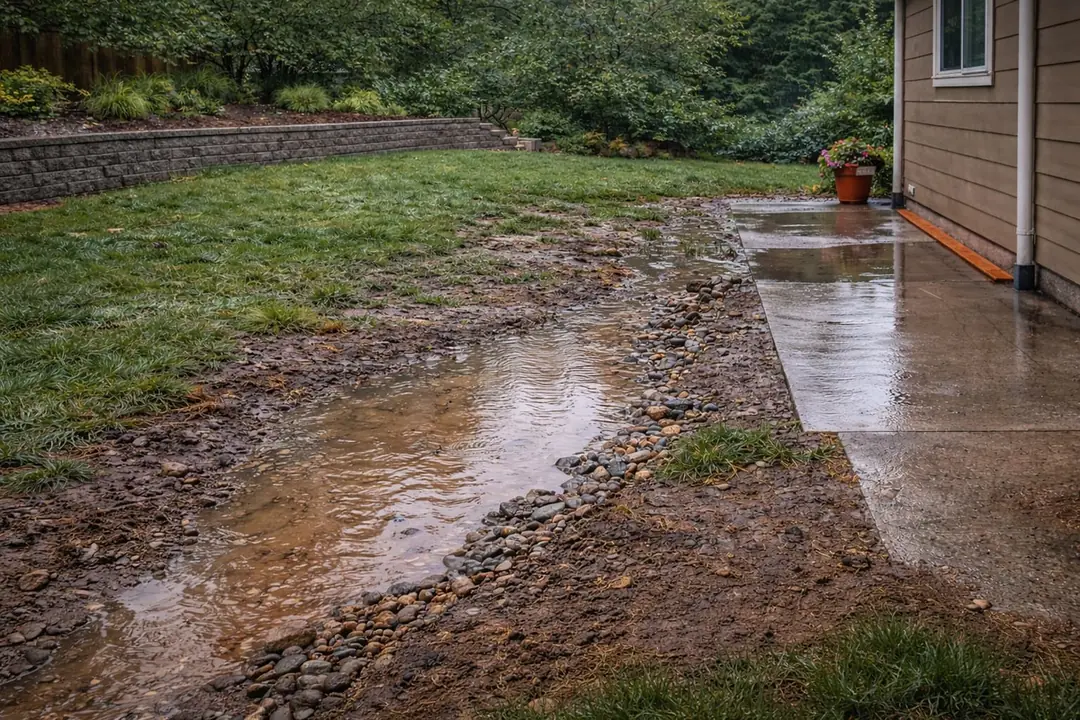
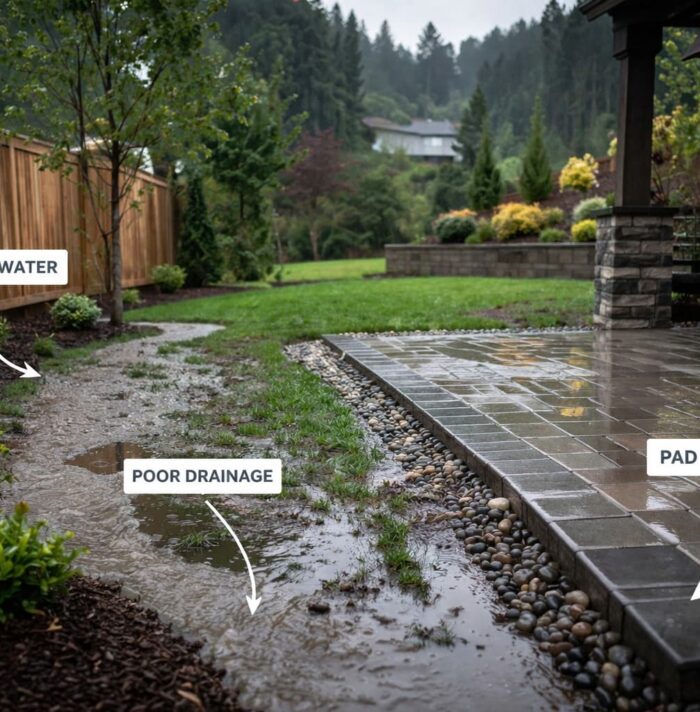
Drainage issues often show up as:
- Standing water after rain
- Soggy lawn areas that never dry properly
- Mud near patios or walkways
- Water pushing against retaining walls
- Water collecting near the foundation
In some cases, the solution may involve:
- French drains
- channel drains
- catch basins
- redirecting runoff
- improving slope and drainage paths
The important part is this:
You want to solve the water problem before you install the finish materials.
Otherwise, you may end up removing work you just paid for.
And in a climate like the Willamette Valley, those hidden water issues usually don’t stay hidden for long.
2. Fix the Grade Before You Build on It
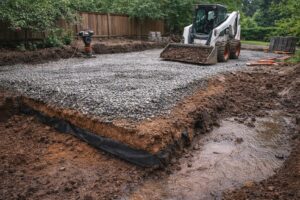 Once drainage is understood, the next step is often grading and soil preparation.
Grading affects how water moves, how surfaces perform, and whether your backyard remodel will stay stable over time.
A lot of outdoor issues are not caused by the patio, pavers, or concrete themselves.
They’re caused by what’s happening underneath.
That’s especially true in areas where yards may look mostly flat but still have subtle slope or runoff problems that become more obvious during the rainy season.
Good grading helps:
- move water away from important areas
- create stable base conditions
- reduce soft spots and uneven settling
- improve the performance of patios and walkways
- prepare the yard for turf, hardscape, and structural work
Poor grading can lead to:
- pooling water
- surface shifting
- uneven patios
- erosion
- premature cracking or settling
This is one of the least glamorous parts of a backyard remodel, but it’s also one of the most important.
Think of it this way:
If the ground is wrong, everything built on top of it is at risk.
3. Build Structural Elements Before the Decorative Ones
If your backyard includes a slope, elevation change, soil pressure, or support needs, this is usually the stage where retaining walls or structural elements should happen.
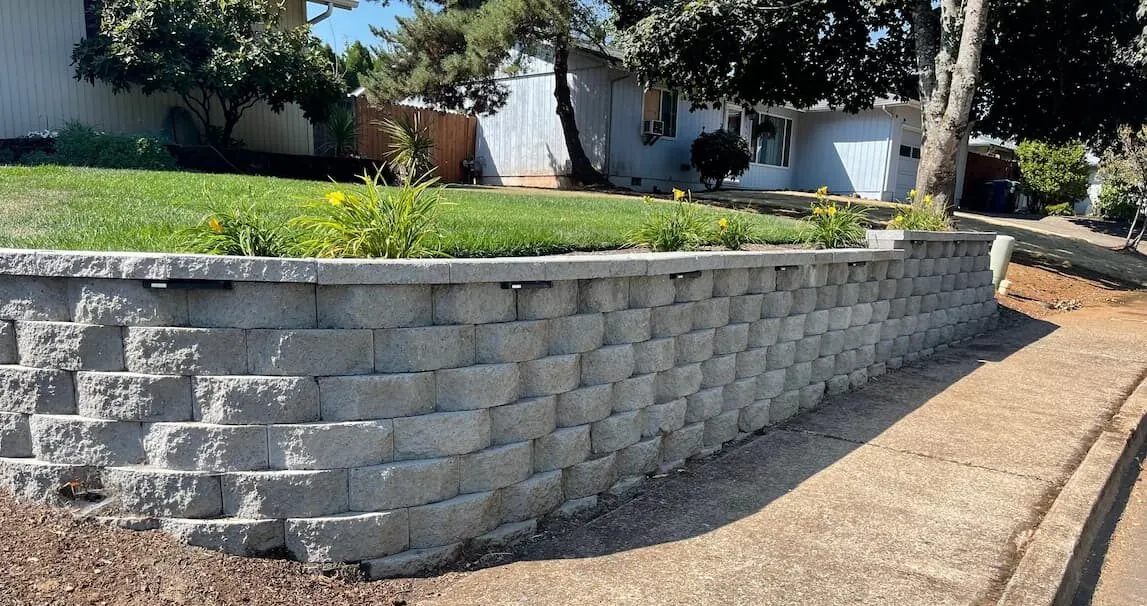
A retaining wall is not just a visual feature — in many yards, retaining wall and hardscape work is what makes the entire backyard functional and stable.
Retaining walls are often needed when:
- the backyard has a slope
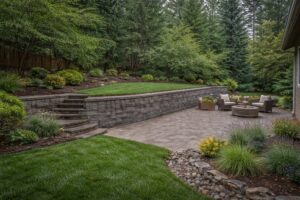
- soil is moving or eroding
- you want to create a level usable area
- you need support before building a patio or concrete surface
- water and pressure need to be managed properly
In this part of Oregon, retaining wall performance often depends on:
- proper drainage behind the wall
- correct base preparation
- good compaction
- correct support for local site conditions
This is another reason sequence matters.
If a retaining wall should have been installed first—but wasn’t—it can disrupt the entire project later.
And if the wall is installed without addressing water and soil conditions, it may not perform the way it should through future wet seasons.
4. Then Install Concrete, Pavers, Patios, and Hardscape
This is the stage many homeowners naturally get excited about.
It’s also the stage where the project starts to feel “real,” because this is when the backyard begins turning into a true outdoor living space.
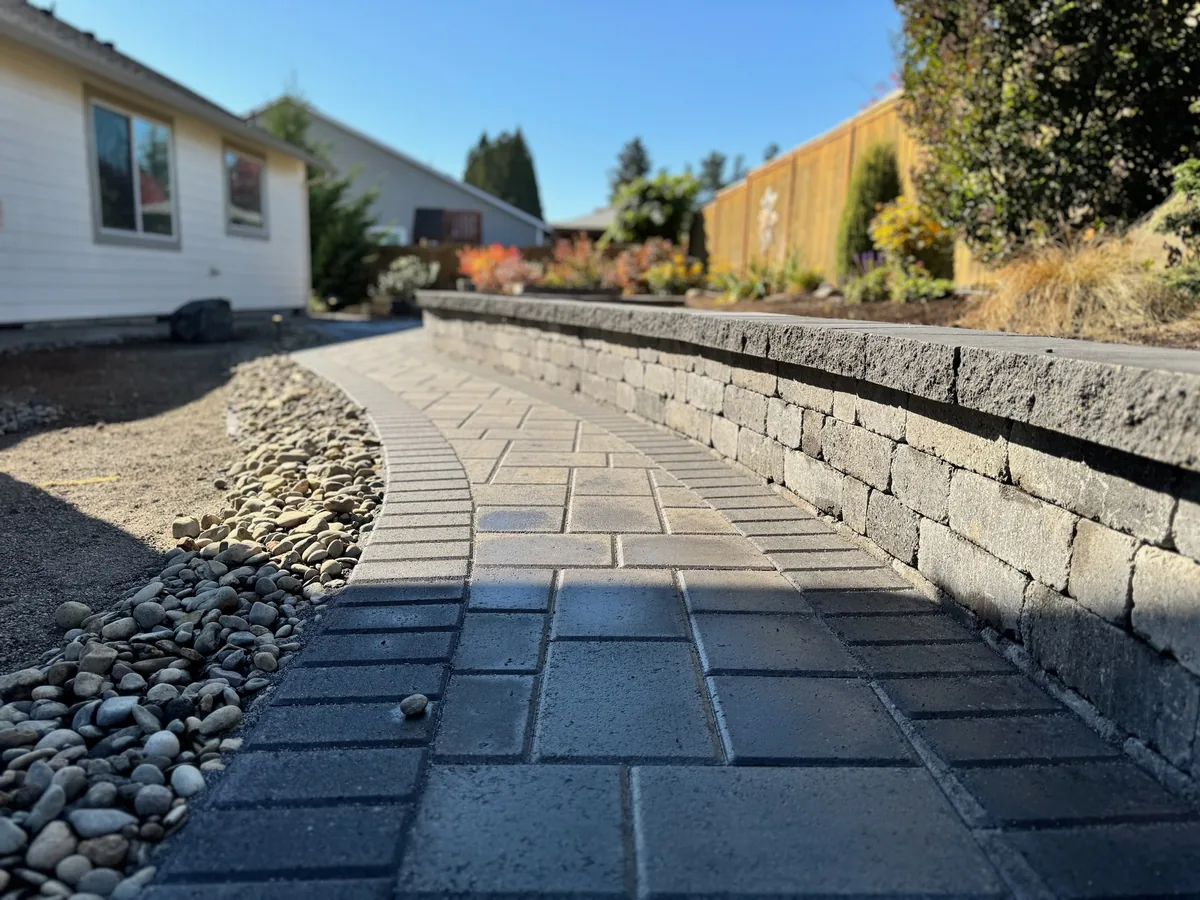
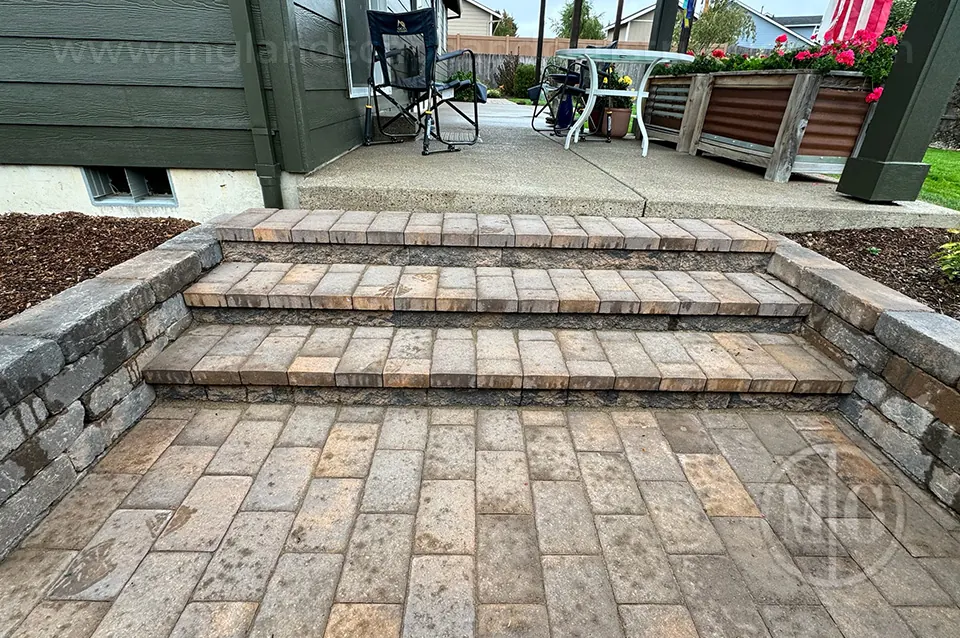
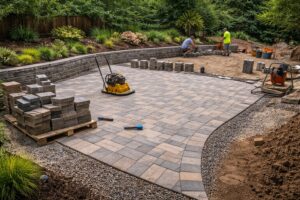 Once the drainage, grading, and structural prep are done correctly, you’re in a much better position to install concrete flatwork and patio surfaces that actually last:
- paver patios
- walkways
- concrete flatwork
- outdoor living surfaces
- seating or entertainment areas
And now, those surfaces have a much better chance of actually lasting.
Why this stage should not come first
Concrete and pavers may look solid, but they still depend on:
- subgrade quality
- compaction
- drainage performance
- correct slope and elevation
When those things are handled correctly, your hardscape is more likely to:
- stay level
- drain properly
- resist shifting
- avoid premature repairs
This is where many costly backyard remodel mistakes happen
Homeowners often choose based on appearance first:
- “We want a patio.”
- “We want pavers.”
- “We want a concrete area.”
- “We want to upgrade the whole backyard.”
Those may absolutely be the right upgrades.
But if the site is not prepared first, the visible work can end up becoming the most expensive part to redo.
And unfortunately, that’s a mistake many homeowners don’t realize until the rainy season exposes it.
5. Finish With Turf, Planting, and Final Touches
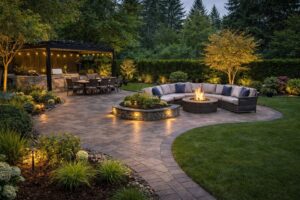 Once the major systems and structural work are in place, then it makes sense to move into the final layer of the project:
- turf or sod
- planting
- decorative landscaping
- clean transitions
- finishing details
This is where the backyard starts to feel complete.
And because the functional work was handled first, the finished result has a much better chance of staying beautiful instead of becoming a maintenance headache.
This final phase is where homeowners often get the most satisfaction—but it should not be the first priority.
A great backyard remodel should look good and perform well.
Not just one or the other.
Why Backyard Remodels in the Willamette Valley Need a Different Kind of Planning
Backyard remodel planning in the Willamette Valley requires more than just choosing the right materials or design style.
It also requires understanding how local conditions affect performance over time.
Outdoor projects in this region often deal with:
- frequent rain
- seasonal saturation
- runoff
- soft or shifting soil
- drainage pressure
- erosion near slopes or edges
That means backyard construction here needs to be planned with long-term function in mind, not just appearance.
What looks good in a photo doesn’t always perform well in a real Oregon yard
A backyard can look amazing on Pinterest or in a design mockup…
…but if the site conditions are ignored, the finished result may not hold up the way homeowners expect.
That’s why local experience matters.
A contractor should not only know how to build something attractive—they should also understand how to build it correctly for the Willamette Valley.
How to Know If You’re About to Do Your Backyard Remodel in the Wrong Order
If you’re planning a project this year, here are a few signs you may need to pause and reassess the sequence before moving forward:
Warning signs include:
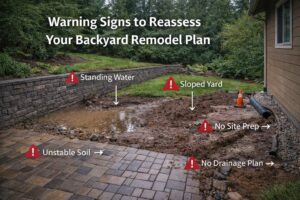
- You’re choosing pavers or concrete before evaluating drainage
- Your yard has slope issues, but no one has discussed grading
- Water already pools somewhere on the property
- You’re planning a patio next to unstable or unsupported soil
- The design looks nice, but no one has explained the site prep
- There’s a retaining wall involved, but drainage hasn’t been discussed
If any of those apply, it doesn’t necessarily mean the project is wrong.
But it may mean the order needs to be clarified before the work begins.
And that can save a lot of frustration later.
The Best Backyard Remodels Start With a Better Plan
Homeowners often think the key to a successful backyard remodel is choosing the right materials.
In reality, the bigger win is often choosing the right sequence.
When the project starts with:
- water control
- site prep
- structural support
- then finish work
…the results tend to be stronger, cleaner, and more durable.
And in many cases, they’re also more cost-effective in the long run, because they reduce the chances of rework and future repairs.
That’s especially important in the Willamette Valley, where even small site issues can become bigger problems if they’re built over instead of corrected early.
Need Help Planning a Backyard Remodel in the Willamette Valley?
If you’re thinking about upgrading your yard, patio, slope, drainage, retaining wall, or outdoor living space, it helps to start with a plan that makes sense for the property—not just the visuals.
At MG Landscape & Construction, we help homeowners in Salem and across the Willamette Valley create outdoor spaces that are not only attractive, but also designed to perform well over time.
Whether your project includes drainage, grading, retaining walls, pavers, concrete, or a full backyard transformation, starting in the right order can make all the difference.
Ready to plan your project the right way?
Contact MG Landscape & Construction today for a free quote.