

Is Your Sprinkler System Wasting Water? A Smarter Summer Watering Guide for Salem Homeowners
A green lawn in summer should not require guesswork, daily watering, or a surprisingly high water bill.
For many Salem homeowners, the issue is not always that the yard needs more water. Sometimes, the real problem is that the sprinkler system is not delivering water efficiently.
Dry patches, over-spray, soggy areas, uneven coverage, and broken sprinkler heads can all point to the same concern: your irrigation system may be wasting water while still failing to keep your lawn and landscape healthy.
During Oregon’s dry summer months, smarter watering can make a noticeable difference. With the right irrigation setup, your yard can receive the water it needs without sending too much of it onto sidewalks, driveways, fences, patios, or areas that do not need it.
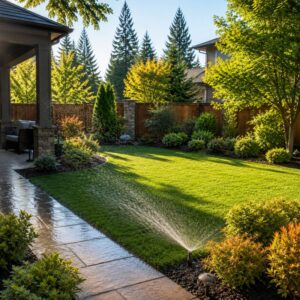 Why Smart Watering Matters in Salem
Summer watering is especially important in Western Oregon because many lawns and landscapes experience dry season stress. Oregon State University Extension explains that, during the dry season, a lush green lawn may need about 1 to 1.5 inches of water per week, typically applied one to three times per week depending on soil conditions and runoff risk.
The City of Salem also recommends watering during cooler times of day, such as before 9:00 a.m. or after 6:00 p.m., because watering outside the hottest hours can reduce evaporation.
That means timing, coverage, and system performance all matter.
A sprinkler system that runs too often, sprays unevenly, or waters the wrong areas may increase waste without improving the health of the lawn.
Signs Your Sprinkler System May Be Wasting Water
Not every irrigation issue is obvious at first. Some systems appear to be working because water is coming out, but the lawn still shows signs of stress.
Here are common warning signs to watch for.
1. You Have Dry Spots Even After Watering
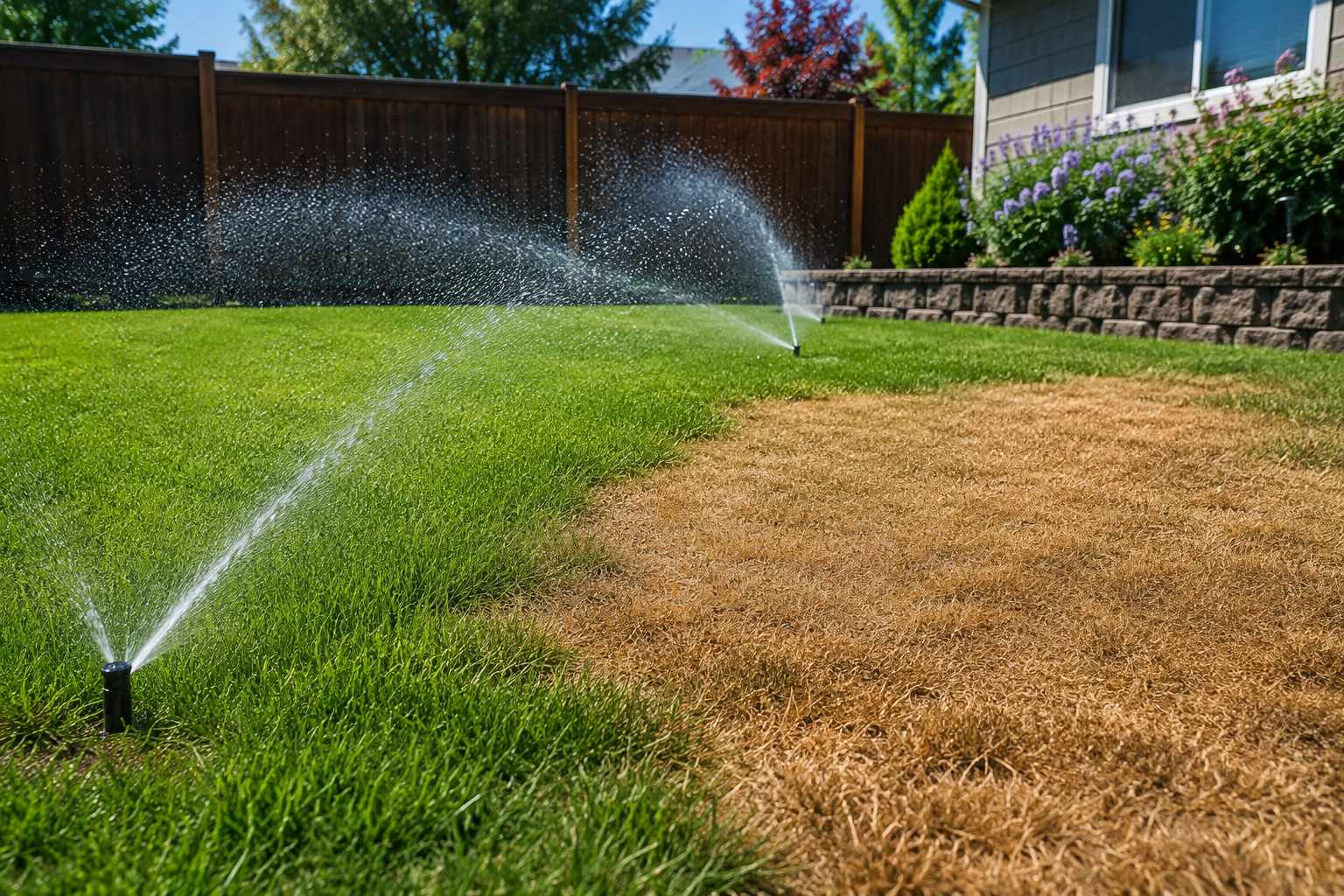
If certain lawn areas stay brown, thin, or crunchy while others look healthy, your sprinkler coverage may be uneven.
This can happen when:
- Sprinkler heads are blocked by grass or plants
- Heads are tilted or sunken
- Water pressure is too low or too high
- The sprinkler pattern does not overlap correctly
- The system was not designed for the current landscape layout
Dry spots do not always mean the entire lawn needs longer watering. Often, they mean the system needs adjustment.
Running every zone longer may waste water in the areas already receiving enough.
2. Water Is Spraying the Sidewalk, Driveway, or Patio
Over-spray is one of the easiest signs of wasted irrigation.
If your sprinklers are watering concrete, pavers, fences, walls, or the street, part of your water is not helping the lawn or landscape at all.
Over-spray can happen because of:
- Poorly aimed sprinkler heads
- Wrong nozzle type
- Too much water pressure
- Heads installed too close to hard surfaces
- Landscape changes that were never matched with irrigation adjustments
This is especially common when a yard has changed over time. A new patio, walkway, planting bed, or turf area can make the original sprinkler layout less effective.
3. Some Areas Are Soggy While Others Stay Dry
A good irrigation system should water evenly.
If one section feels wet and soft while another section looks dry, the problem may be poor zone balance.
Possible causes include:
- Mismatched sprinkler heads in the same zone
- Broken nozzles
- Uneven water pressure
- Incorrect watering duration
- Poor soil absorption
- Low spots in the yard
- Drainage problems near irrigated areas
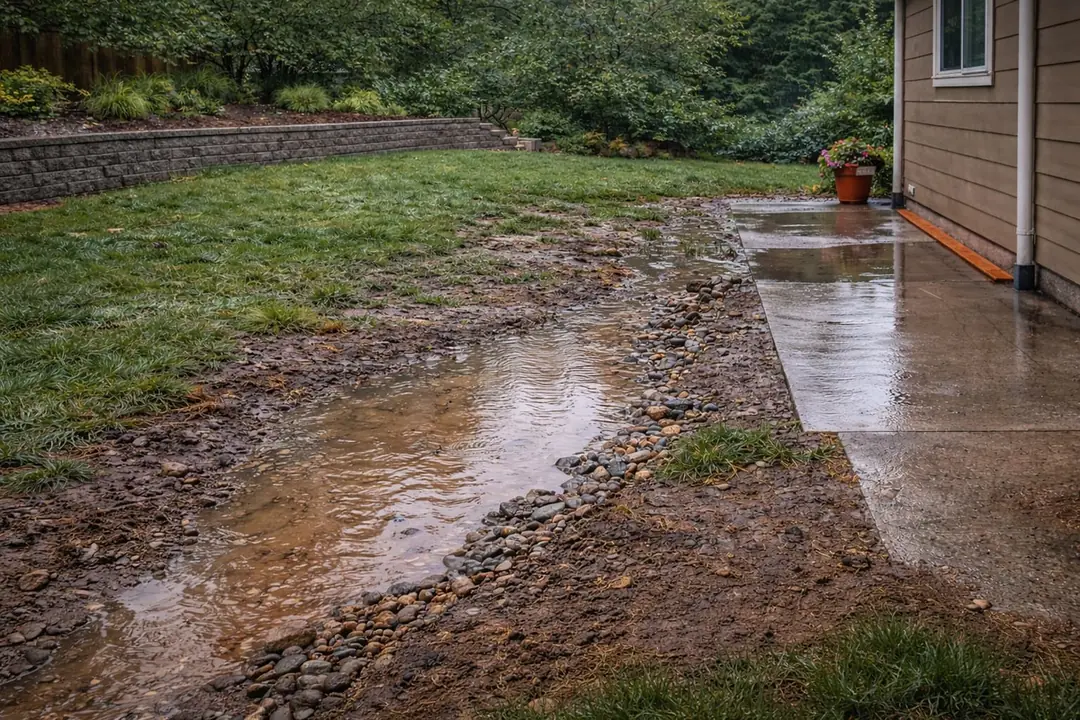
This is important because over-watering one area can create its own problems. Soggy soil can weaken lawn health, create mud, and make the yard less usable.
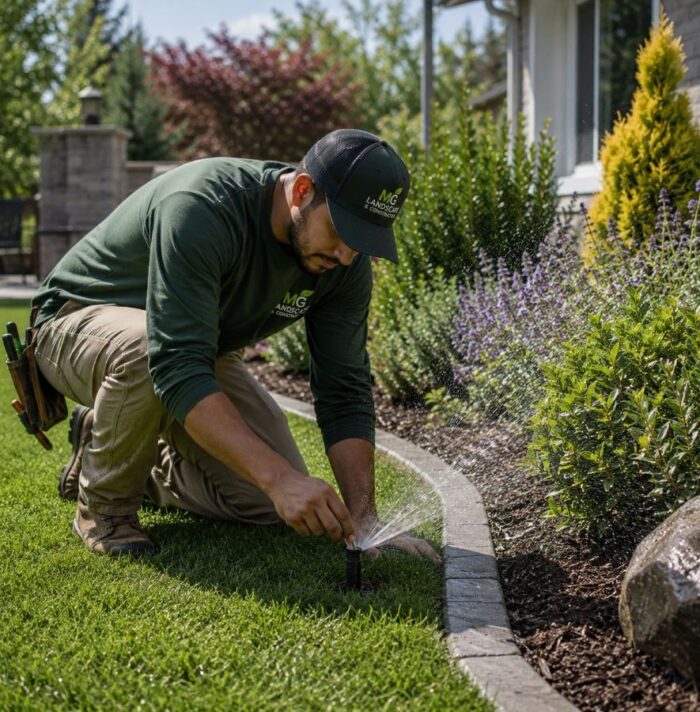
4. Your Sprinkler Heads Are Leaking, Bubbling, or Dripping
A leaking sprinkler head may seem small, but over time it can waste a meaningful amount of water.
Look for:
- Water bubbling around a head
- Puddles forming after the system shuts off
- Heads that continue dripping
- Water pressure that suddenly seems weaker
- One zone that performs worse than the others
A leak may also indicate a damaged line, cracked fitting, broken valve, or pressure issue.
These problems are easier to correct when they are found early.
5. Your System Runs Every Day
Daily watering is not always the best approach for lawns.
In many cases, deeper and less frequent watering is more effective than shallow daily watering. OSU Extension recommends watering one to three times per week for most soil types to help apply enough water while reducing runoff from applying too much too quickly.
Watering too often can encourage shallow roots, while watering too fast can cause runoff before the soil has time to absorb moisture.
A smarter schedule depends on:
- Soil type
- Sun exposure
- Lawn condition
- Slope
- Sprinkler output
- Planting areas
- Weather
- Shade
- Drainage
The goal is not simply to water more. The goal is to water better.
6. Your Water Bill Increases but Your Lawn Still Struggles
A higher summer water bill may be expected if irrigation is running regularly. But if the lawn still looks uneven or stressed, the system may not be using that water efficiently.
This is where an irrigation inspection can be helpful.
Instead of guessing, a professional can look at:
- Which zones are under performing
- Whether sprinkler heads are properly placed
- Whether spray patterns overlap correctly
- Whether the controller schedule makes sense
- Whether repairs or upgrades are needed
- Whether some areas would perform better with drip irrigation
- Whether grading or drainage is affecting lawn performance
Sometimes a small adjustment can improve the result. Other times, the system may need repairs or redesign.
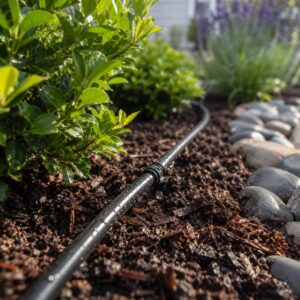 Sprinklers vs. Drip Irrigation: Which Areas Need Which?
Not every part of a yard should be watered the same way.
Sprinklers are commonly used for lawns because they can cover larger open areas. But planting beds, shrubs, trees, and narrow landscape areas may benefit from more targeted watering.
Drip irrigation can be a better option for certain areas because it delivers water closer to the root zone instead of spraying it through the air.
This can be especially useful for:
- Planting beds
- Shrub areas
- Foundation landscaping
- Narrow side yards
- Sloped areas
- Water wise landscapes
- Mulched areas
- Areas where over-spray is a problem
A well designed irrigation system may use both sprinklers and drip irrigation, depending on the needs of each part of the property.
When a Smart Controller Can Help
A smart irrigation controller can help adjust watering based on schedule, weather, and seasonal needs.
However, a smart controller is not a magic fix if the physical system has problems.
Before relying on automation, it is important to make sure:
- Sprinkler heads are working correctly
- Zones are properly set up
- Nozzles match the area being watered
- The schedule is appropriate
- Leaks are repaired
- Water is reaching the right places
A smart controller works best when the irrigation system itself is already in good condition.
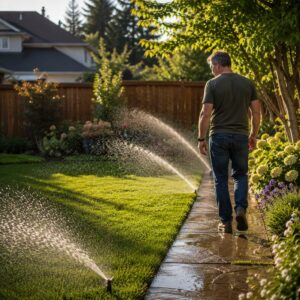 Simple Checks Homeowners Can Do This Week
Before calling for service, you can observe your system and collect useful information.
Try this:
- Run each irrigation zone manually.
- Watch where the water lands.
- Look for over-spray on hard surfaces.
- Check for dry spots after watering.
- Look for bubbling or pooling around sprinkler heads.
- Notice whether one zone has weaker pressure.
- Check whether plants are blocking spray patterns.
- Confirm that watering is scheduled during cooler hours.
- Look for areas that stay soggy long after irrigation ends.
These observations can help a contractor diagnose the issue more efficiently.
When to Call a Professional
It may be time for professional irrigation help if you notice:
- Recurring dry spots
- Sprinklers spraying sidewalks or driveways
- Broken or sunken heads
- Weak water pressure
- Leaks or puddles near sprinkler heads
- Soggy areas after watering
- A controller schedule that does not match your yard’s needs
- Poor coverage after new landscaping or hardscape work
- Water waste that continues after basic adjustments
A professional review can help determine whether your system needs simple repairs, zone adjustments, new sprinkler heads, drip irrigation, or a more complete irrigation redesign.
Smarter Watering Supports a Healthier Yard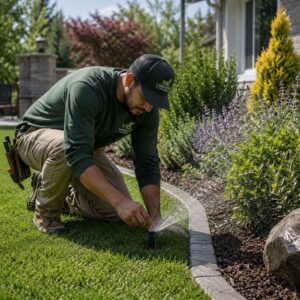
A sprinkler system should do more than turn on and off.
It should help your lawn and landscape receive the right amount of water, in the right places, at the right time of day.
For Salem homeowners, improving irrigation efficiency can help reduce waste, support healthier grass and plants, and make the yard more enjoyable during the summer season.
At MG Landscape & Construction, we help homeowners evaluate irrigation performance, correct sprinkler issues, and plan landscape improvements that make outdoor spaces easier to maintain.
If your sprinkler system is running often but your yard still looks stressed, it may be time to take a closer look.
Schedule an Irrigation Consultation in Salem, Oregon
Is your sprinkler system wasting water this summer?
Contact MG Landscape & Construction to schedule a consultation and explore smarter irrigation solutions for your lawn and landscape.
Call: (503) 519-7116
Service area: Salem, Keizer, and surrounding Willamette Valley communities
Get a Free Quote