

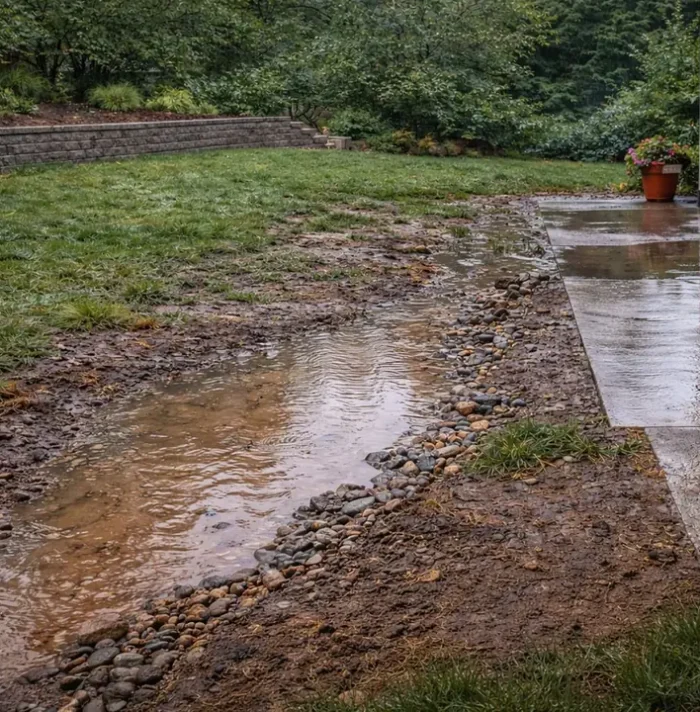
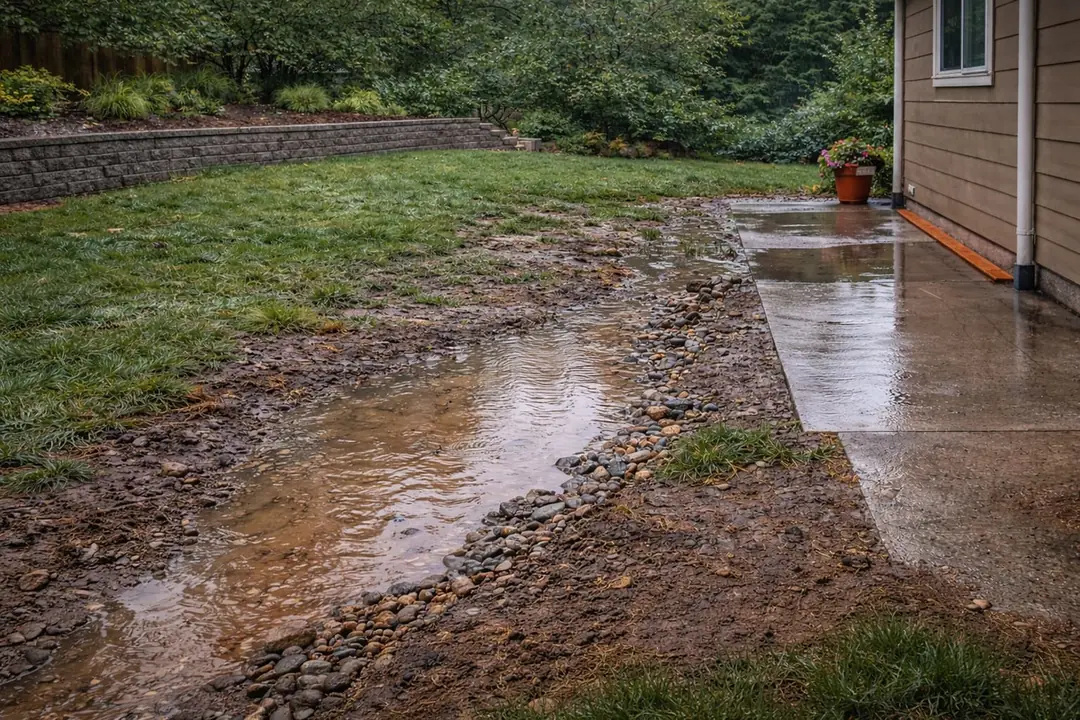
A yard can look perfectly manageable at the end of summer and tell a different story after a sustained rain. Water collects at the same corner of the patio. The route to the gate turns soft. A planting bed stays wet long after nearby ground has dried.
A fall yard drainage check in Salem is a chance to notice those patterns before they become part of your winter routine. You do not need to diagnose the system yourself. Start by understanding where water comes from, where it pauses and where it is supposed to go.
Begin with what happened last winter
Think back to the spots you avoided during wet weather. Did water pool near the house, cross a walkway or collect behind a landscape wall? Were those issues brief, or did they persist between storms?
Old photographs can be more useful than trying to recreate the problem on a dry day. If you have no photos, make a simple note of the locations and what you remember. Mention any recent patio, fence or landscape work that may have changed the area.
A drainage assessment becomes more productive when the contractor can see the pattern, not just the puddle.
Trace the visible route from the roof and pavement
From ground level, look at where downspouts release water and how nearby hard surfaces slope. Follow that route across the yard. Water leaving one surface may be entering a lower area that has no clear way to drain.
Do not disconnect buried pipes or assume an unknown outlet can be moved. Record what is visible and bring questions to the assessment. Any proposed discharge point needs to suit the site and applicable requirements, without moving the problem onto neighboring property.
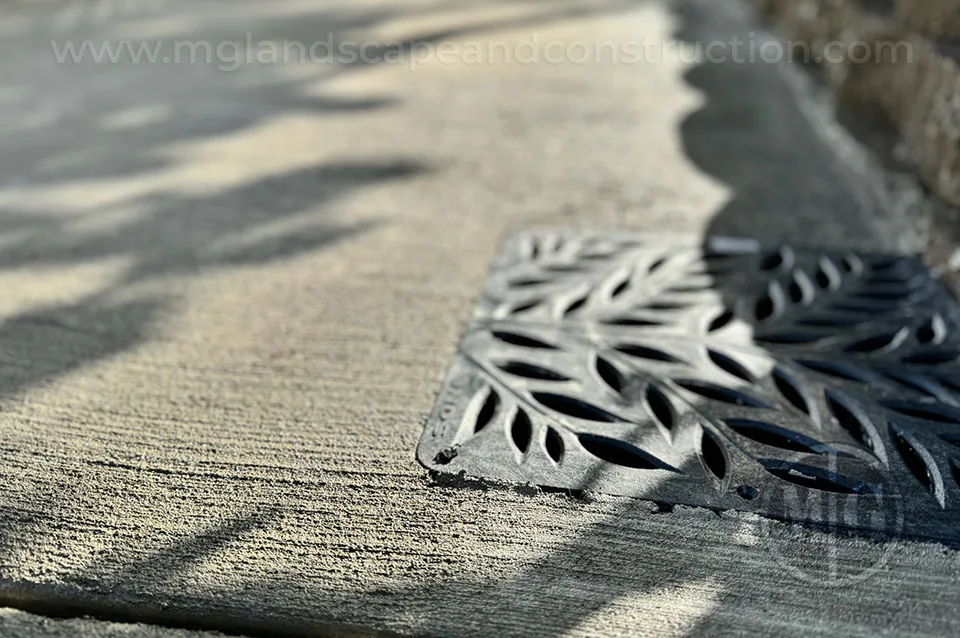
Where safe and accessible, clear loose leaves from the top of an existing surface grate. If water still backs up, the cause may be farther along the system. A clear-looking inlet does not establish that the buried line or outlet is functioning.
Distinguish a temporary puddle from a recurring pattern
One observation during a downpour gives only part of the picture. Check again after rain has stopped, from a safe area. Note where water remains and whether the affected area changes over time.
Soil conditions matter. OSU Extension describes how soil texture and compaction influence runoff and ponding. A low spot may be part of the problem, but adding surface soil alone does not necessarily address incoming runoff or poor drainage beneath it.
Also note unusual wetness during dry weather. Irrigation or a leak may be contributing. Tell the contractor when the water appears rather than assuming every wet area has the same cause.
If you already recognize a recurring problem, request a yard drainage assessment from MG. You can start the conversation with photos and observations before the next heavy rainfall.
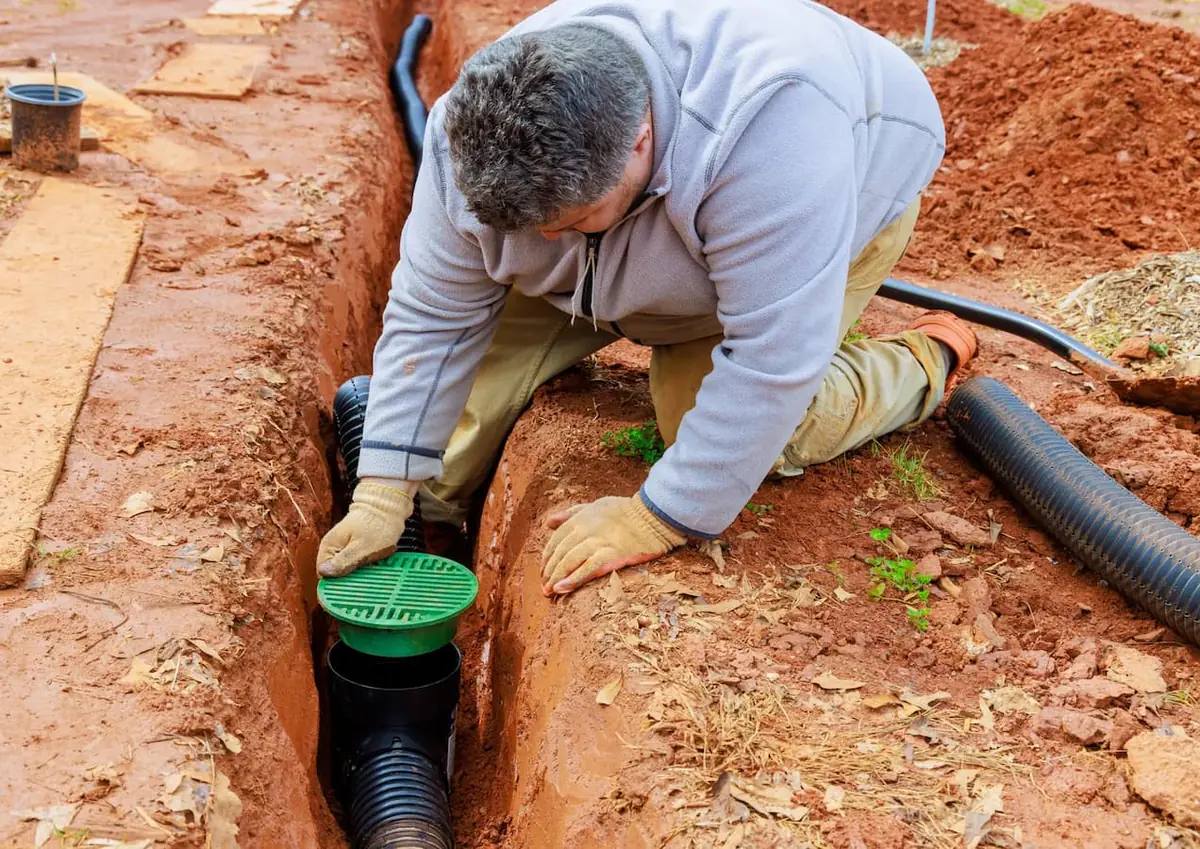
Match the solution to the source of the water
Different drainage approaches do different jobs. A surface inlet can collect water at a planned low point. A channel drain may intercept runoff crossing a paved area. A French drain can be considered for certain subsurface water conditions. Grading may be part of directing surface flow.
These are possibilities to evaluate, not interchangeable fixes. A successful plan considers the contributing area, soil, elevations, existing pipes and a suitable outlet. The most visible component is only one part of that system.
Ask the contractor what is causing the problem, what the proposed work will collect or redirect, and where that water will go. Those questions help make the estimate understandable without requiring you to choose pipe sizes or design the installation.
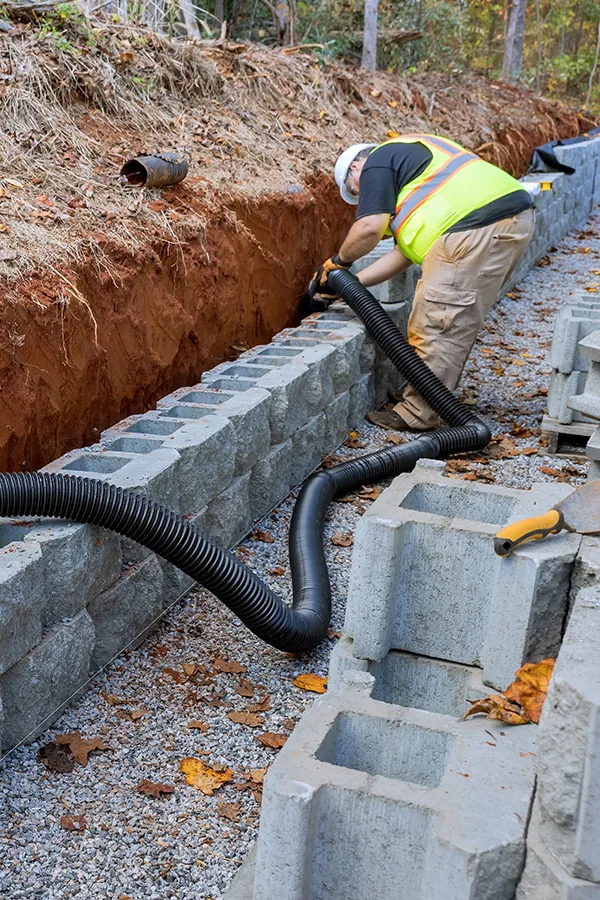
Give walls and new hardscape their own attention
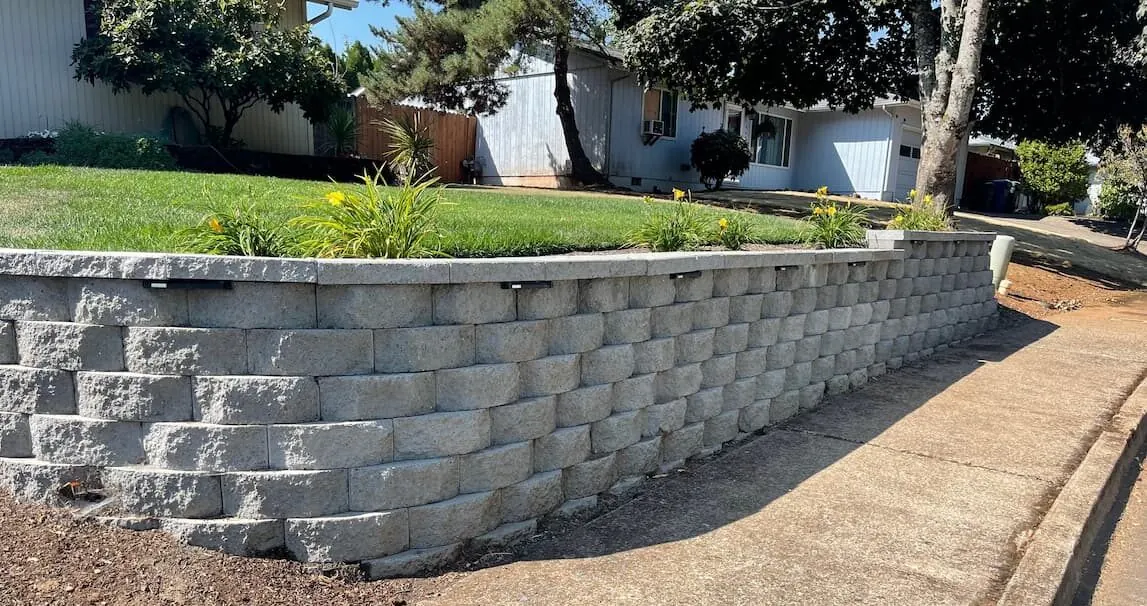
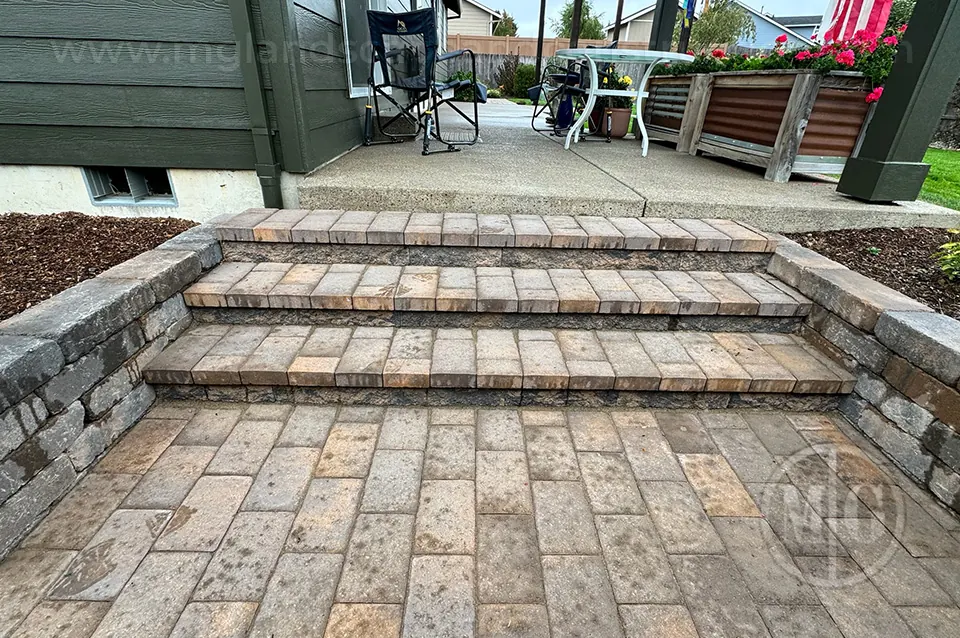
Water collecting near a retaining wall or at the edge of a patio deserves to be included in the assessment. Nearby surfaces may direct runoff toward areas that were not intended to receive it.
If a wall is visibly leaning, bulging or losing material, keep clear of the affected area and seek a professional assessment. Do not excavate behind it to look for a pipe. A structural concern needs more than a surface cleanup.
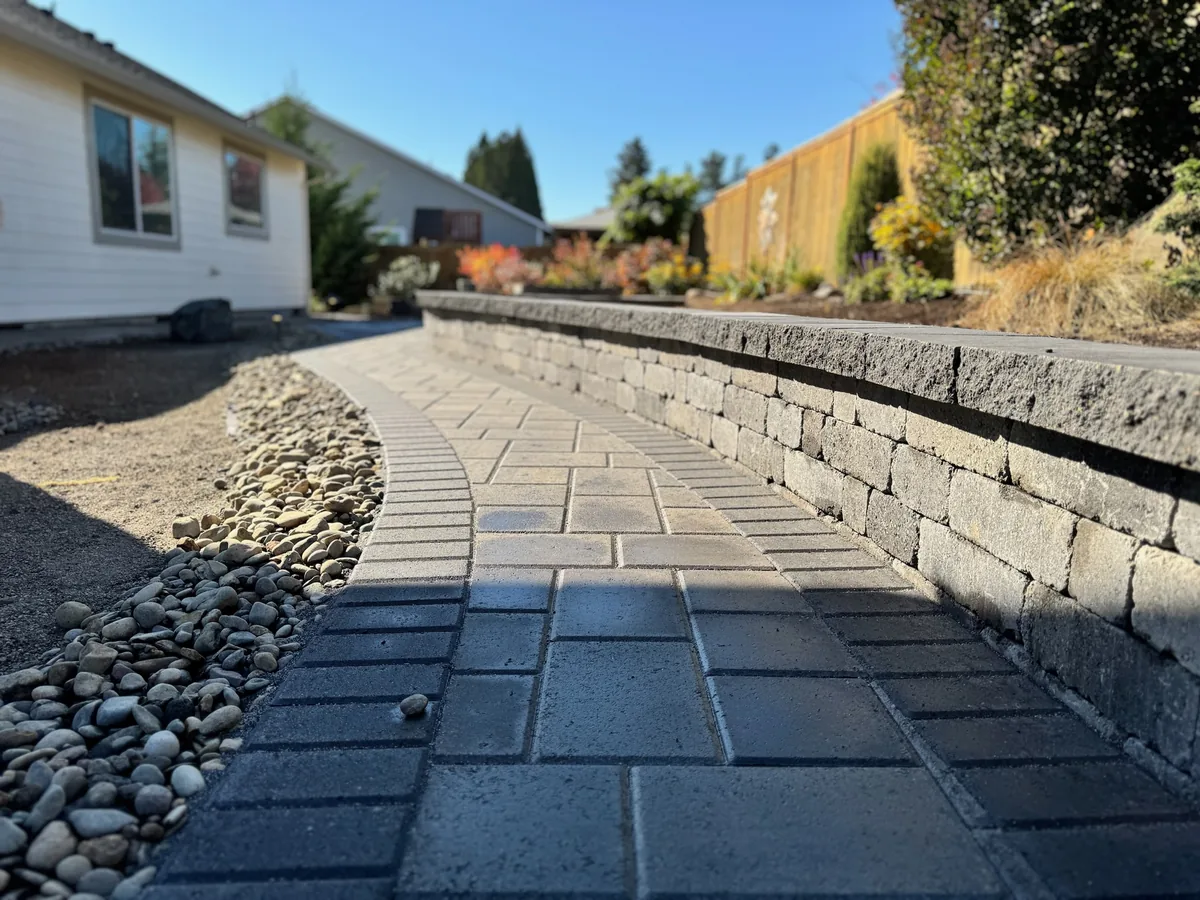
For a new project, raise drainage questions before installation begins. It is easier to coordinate elevations and water management while a patio or walkway is being planned.
Turn observations into a practical next step
Bring a few photos, a description of when water appears and the locations that concern you. You do not need to know the name of the drainage system you need.
MG Landscape & Construction provides drainage solutions for Salem-area properties. Request a drainage estimate or call (503) 519-7116 to discuss a plan suited to your yard.