

The narrow route beside the house rarely gets the attention the patio does. Yet it may be the path you use to wheel out the bins, bring garden supplies inside the gate or reach the backyard with your dog. When the rain returns, a worn strip of ground can become the least pleasant part of those routines.
The most useful side yard walkway ideas for Salem homes start with those everyday trips. A good path connects the places you already use and accounts for water, gate access and changes in elevation before materials are chosen.
Follow your daily route before drawing a new one
Walk from the driveway to the backyard as you normally would. Notice where you turn, pause to open a gate or step around equipment. Those movements can reveal why the current route feels inconvenient.
For example, a narrow bend may work when your hands are empty but feel awkward with a wheelbarrow. A path that ends just short of the gate can leave you standing in the same muddy patch each winter. Plan the entire connection rather than only the section that looks worst.
Leave room for access to the home and any equipment beside it. The finished layout should also accommodate the doors and gates that open onto the route.
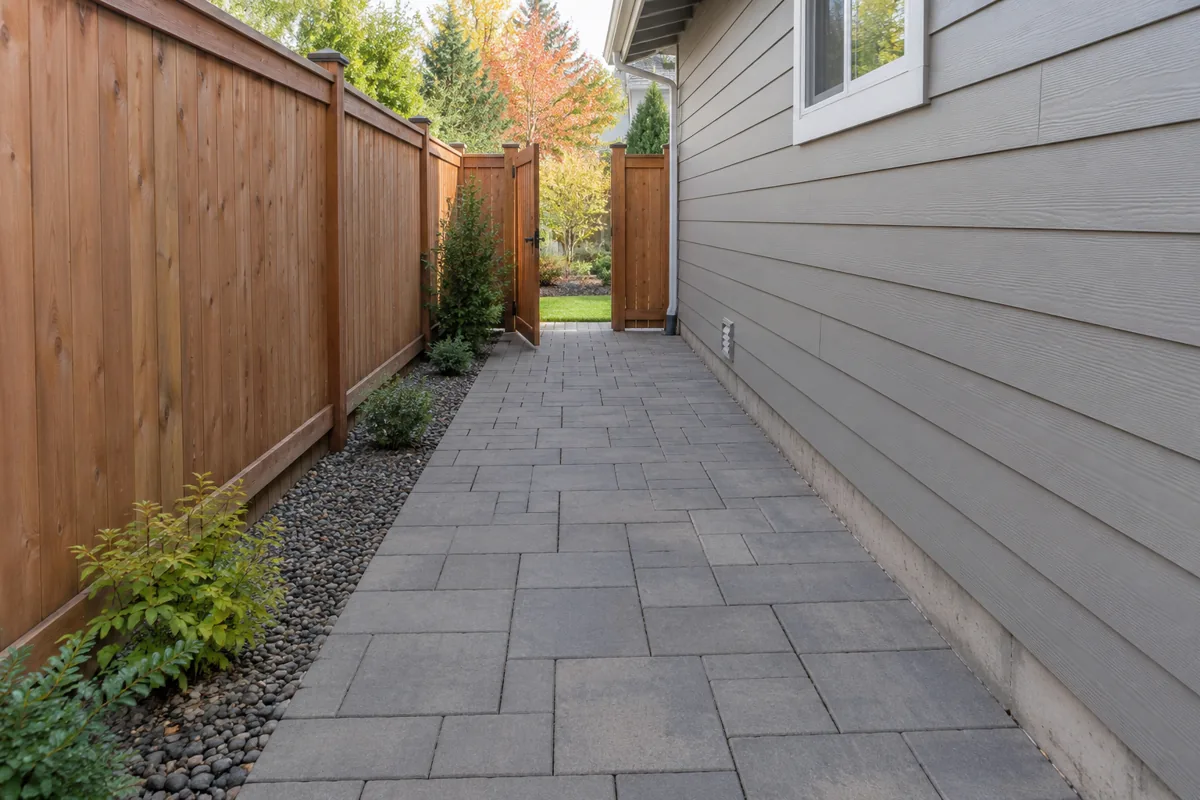
Illustration of a side yard walkway with gate access.
Choose a surface for the traffic it will carry
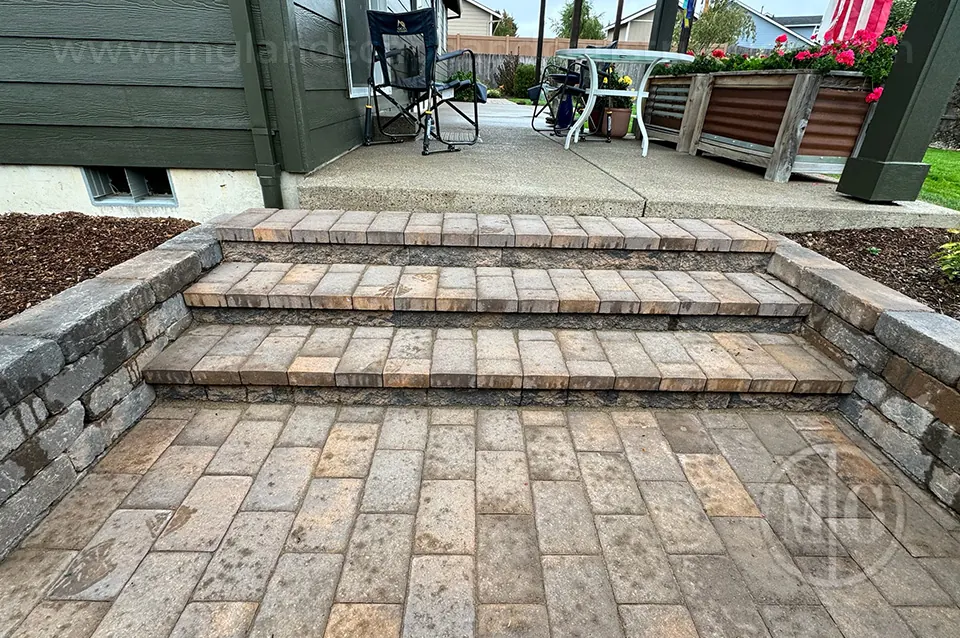
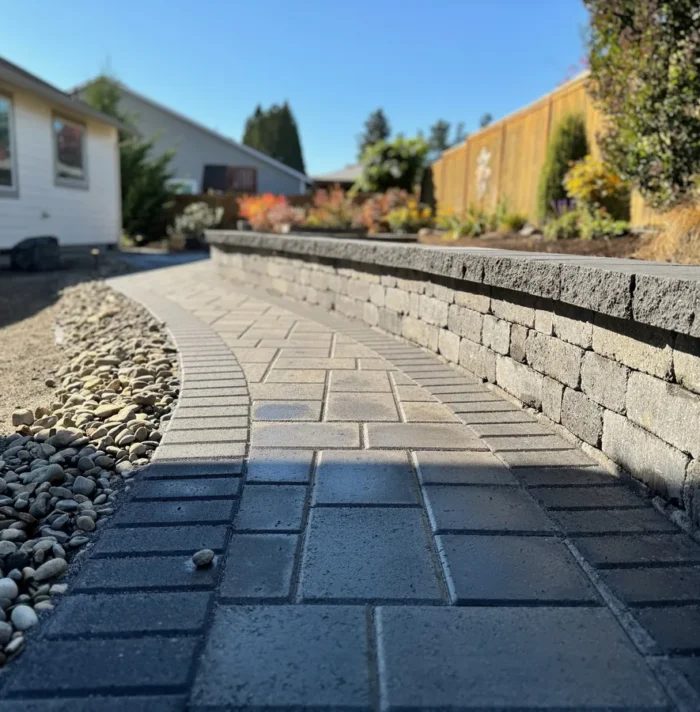
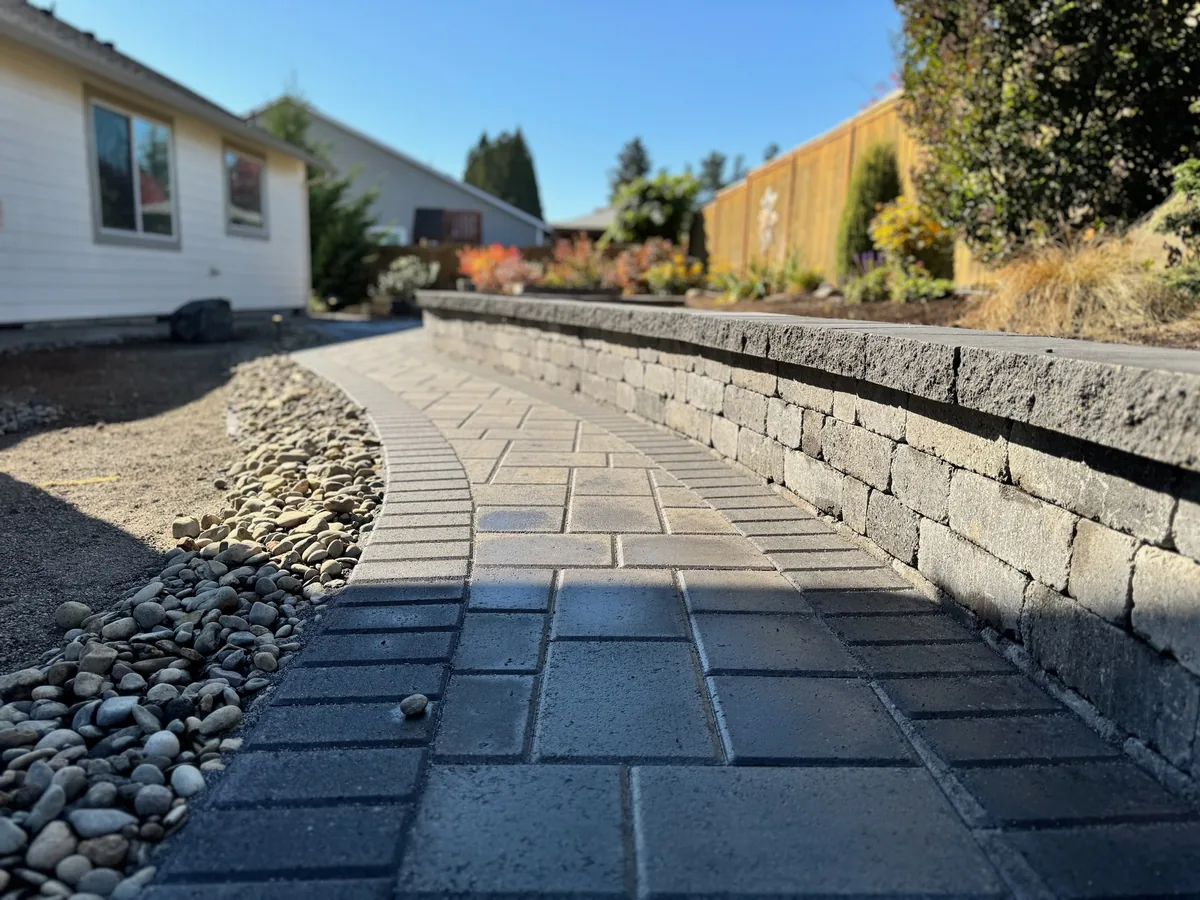
A continuous paver walkway offers a defined route and a choice of patterns that can connect visually with an existing patio. Individual stepping stones can suit a less frequently used garden path, but gaps deserve consideration if you regularly move wheeled equipment.
Think about the people using the path, too. A route intended for frequent daily access should be evaluated for comfortable movement, consistent transitions and the needs of your household. Discuss any specific mobility requirements at the start of the project.
Texture, shade and accumulated leaves can affect a path’s use in wet weather. No outdoor surface should be treated as permanently slip-proof. Choose a suitable material and plan to keep the route clear.
MG’s paver walkway and garden path services provide a starting point for discussing the surface, layout and connection to the rest of your yard.
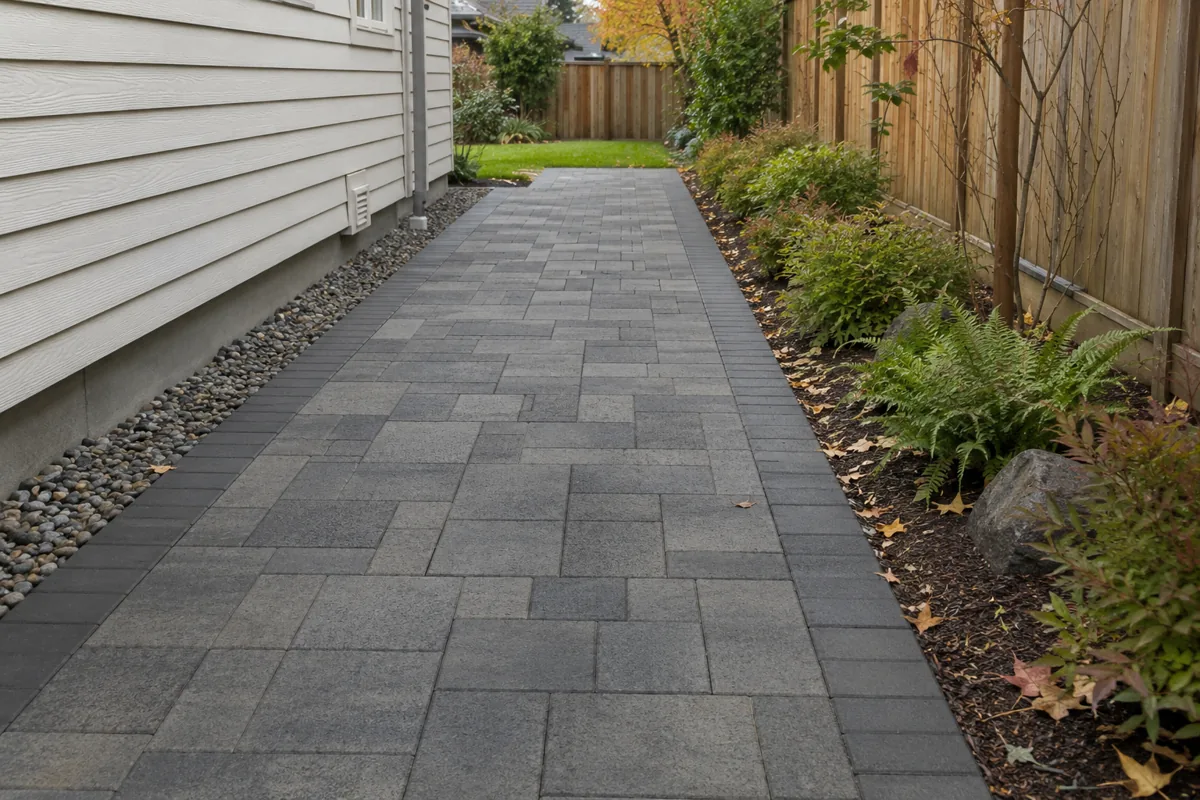
Illustration of pavers and edging along a side yard.
A new surface still needs a drainage plan
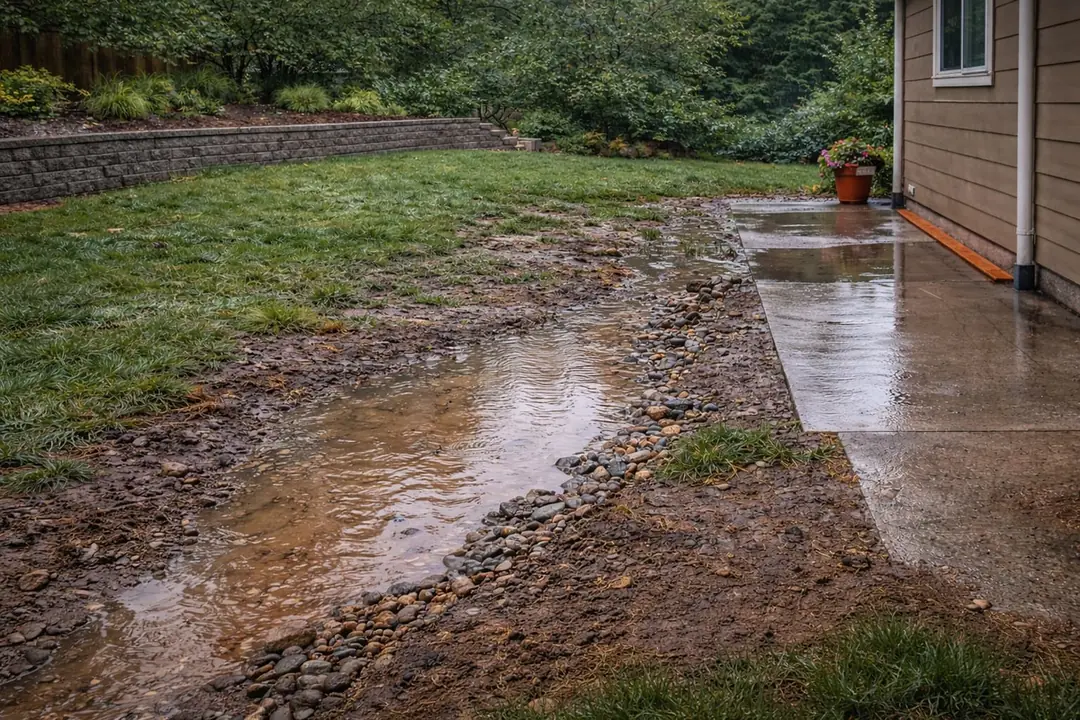
Covering a muddy spot will not necessarily resolve why it stays wet. The area might collect roof runoff, sit below adjacent surfaces or have soil that drains slowly. The new path can change where that water moves.
Look for clues along the entire route, including downspouts, existing drains and ground that slopes toward the house. Note whether the same area remains wet after the rest of the yard has dried. Share those observations during the site visit.
Soil compaction can reduce drainage and contribute to ponding, as OSU Extension explains in its guidance on wet soils. The appropriate solution depends on the site, so a path project may need grading or drainage work alongside surface preparation.
Where a recurring water problem is part of the picture, consider MG’s drainage services before finalizing the walkway. The goal is a workable route and a sensible destination for the water.
Make changes in elevation part of the design
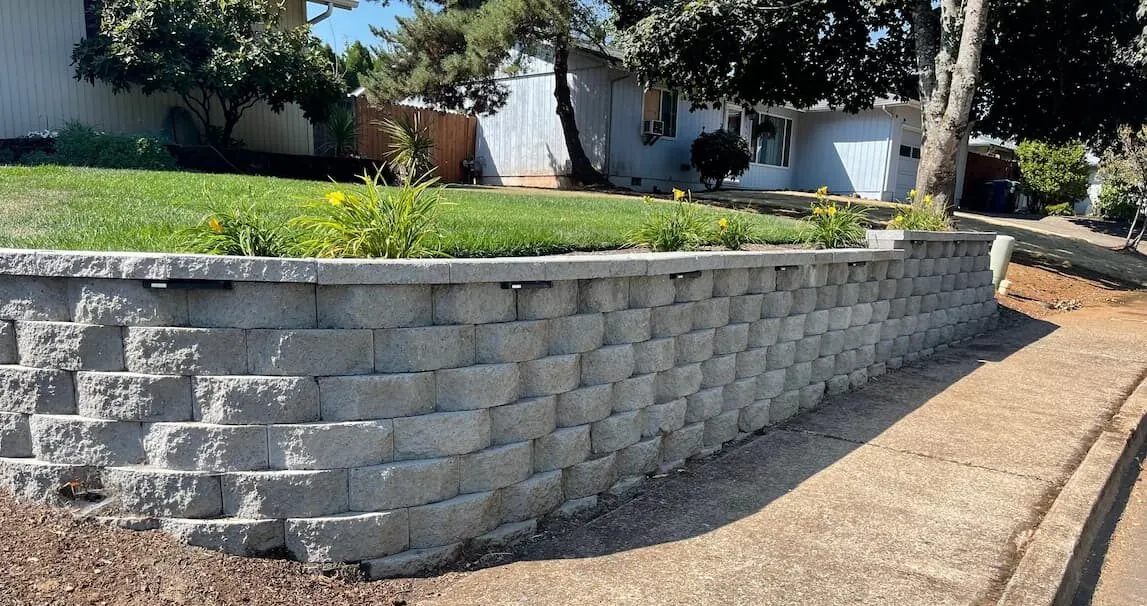
A side yard can look simple from the driveway and become more complicated near the backyard. Slopes, a raised patio or a retaining wall may determine how the path connects.
A contractor can assess whether the route needs a change in alignment, steps or another approach. Door thresholds and nearby landscape levels also matter. Raising a path without considering those relationships can create a different access or drainage problem.
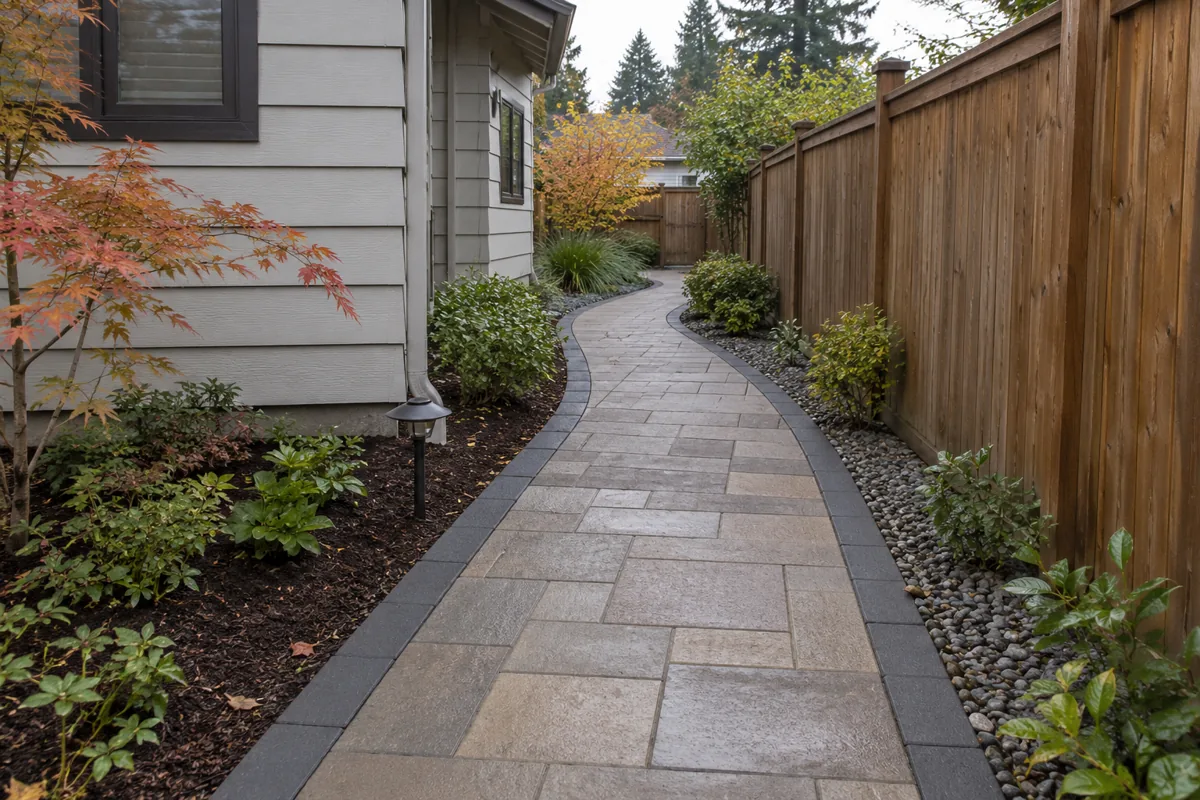
Illustration of a walkway connecting a side yard.
Keep the design calm and connected
You do not need a different material for every part of the property. Repeating a paver tone or border from the patio can help the path feel like a natural continuation. A simple route is often easier to understand and use than a decorative layout full of tight turns.
Allow for the mature size of nearby planting rather than only its current shape. Keep a practical way to maintain the edges, and avoid a design that relies on squeezing past vegetation to reach a gate.
Before work starts, discuss access for the crew, how existing irrigation will be protected and when the route may be unavailable. These small planning details make the project easier to live with.
Give an overlooked space a useful purpose
A side yard improvement does not have to be a full backyard remodel. It can be a focused project that makes daily routines easier and gives the landscape a more complete connection.
MG Landscape & Construction installs paver walkways and related hardscape features for Salem-area homes. Request a walkway estimate or call (503) 519-7116 to discuss the route you want to improve.