

 Oregon is known for its rainy seasons, but summer can bring extended periods of dry weather—especially throughout Salem and the Mid-Willamette Valley.
During these warmer months, a properly functioning irrigation system can make the difference between a healthy, attractive landscape and a yard affected by dry grass, stressed plants, excessive watering, or unexpectedly high water bills.
Even when an irrigation system appears to be working, it may not be watering the property evenly or efficiently. Broken sprinkler heads, poor coverage, incorrect watering schedules, and hidden leaks can waste water while still leaving parts of the landscape dry.
Here are some practical ways to improve your irrigation system and protect your landscape during Oregon’s dry summer season.
1. Look for Dry or Discolored Areas
One of the easiest ways to identify an irrigation problem is to inspect the lawn after the system has been running.
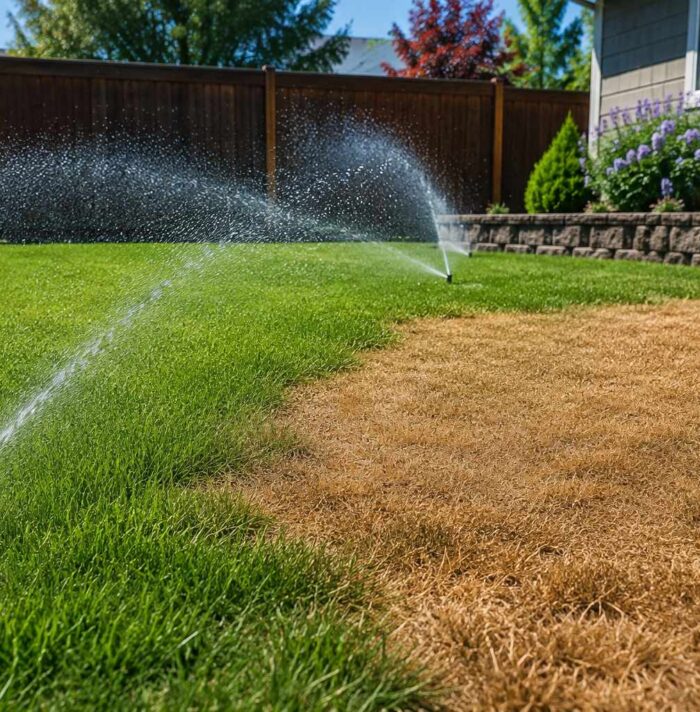
Dry, yellow, or brown patches may indicate that certain areas are not receiving enough water. This can happen when:
- Sprinkler heads are blocked by grass or plants.
- The spray pattern is incorrectly adjusted.
- Water pressure is too low.
- Sprinklers are spaced too far apart.
- One irrigation zone is not functioning properly.
An effective irrigation system should provide reasonably consistent coverage throughout each watering zone.
When one area remains dry while another becomes saturated, the system may need to be adjusted rather than simply operated for a longer period.
2. Check for Overspray and Water Waste
Water should reach the lawn, plants, shrubs, and garden beds—not sidewalks, fences, driveways, or the side of the house.
Overspray is a common sign that a sprinkler head needs adjustment. It can also occur when the wrong type of nozzle has been installed for the area.
Walk around the property while the irrigation system is operating and look for water landing on:
- Walkways.
- Patios.
- Driveways.
- Fences.
- Exterior walls.
- Areas that are already saturated.
Correcting overspray can reduce waste and help direct more water toward the parts of the landscape that actually need it.
3. Inspect Every Sprinkler Head
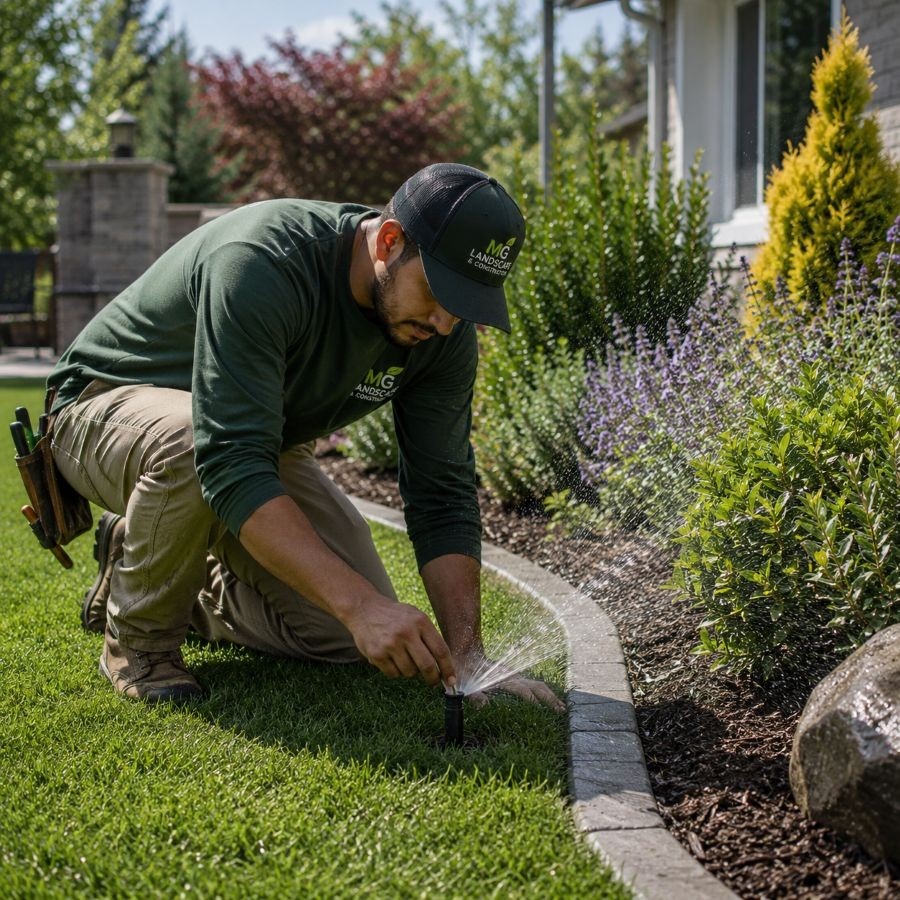
Sprinkler heads can become damaged by lawn equipment, soil movement, foot traffic, roots, or normal wear.
A damaged sprinkler head may:
- Leak around its base.
- Spray in the wrong direction.
- Produce a weak or irregular stream.
- Fail to rise completely.
- Remain elevated after the system turns off.
- Create pooling water around the surrounding grass.
Run each irrigation zone separately and inspect every sprinkler head. Small problems may appear insignificant, but a leaking or misaligned sprinkler can waste a considerable amount of water over an entire summer.
A professional irrigation inspection can help identify damaged heads, incorrect nozzles, coverage gaps, pressure problems, and other issues that may not be obvious to the homeowner.
4. Adjust the Watering Schedule for Summer
An irrigation schedule that worked during spring may not provide the right amount of water during warmer and drier summer conditions.
However, increasing the watering time without checking the system first is not always the best solution. If coverage is poor, running the system longer may only overwater some areas while others remain dry.
The ideal watering schedule depends on several factors:
- Type of grass.
- Soil conditions.
- Sun exposure.
- Shade.
- Plant varieties.
- Slope and drainage.
- Irrigation equipment.
- Local watering restrictions.
In many situations, deeper and less frequent watering encourages healthier root development than short, frequent watering cycles.
Watering earlier in the morning can also help reduce evaporation and allow water to soak into the soil before daytime temperatures rise.
Homeowners should follow current local watering requirements and adjust schedules according to actual landscape conditions.
5. Avoid Watering Too Quickly
Some properties have compacted soil, sloped areas, or sections where water does not absorb immediately.
When irrigation runs for too long without interruption, water may begin flowing away from the intended area rather than soaking into the ground.
A cycle-and-soak schedule can help address this problem. Instead of watering one zone continuously, the controller divides the watering period into shorter cycles with pauses between them.
For example, a zone that normally runs for 18 minutes could be divided into three shorter watering cycles. The pauses give the soil more time to absorb the water and may reduce runoff.
This approach can be particularly helpful on:
- Sloped lawns.
- Compacted soil.
- Heavy soil.
- Newly installed landscapes.
- Areas where water commonly pools or runs toward a walkway.
6. Use Drip Irrigation Around Plants and Shrubs
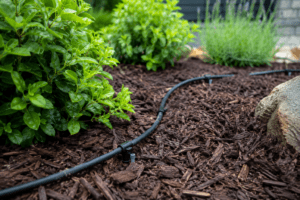
Spray irrigation is useful for many lawn areas, but it is not always the most efficient option for shrubs, trees, and garden beds.
Drip irrigation delivers water more directly to the root zone. This can reduce evaporation and limit the amount of water landing on leaves, mulch, fences, or nearby hardscaping.
Drip irrigation may be useful for:
- Shrub beds.
- Vegetable gardens.
- Foundation plantings.
- Trees.
- Planters.
- Narrow planting areas.
- Landscaped borders.
The tubing and emitters should still be inspected periodically. Clogged emitters, damaged lines, or incorrect placement can prevent individual plants from receiving enough water.
9. Watch for Signs of Hidden Leaks
Not every irrigation leak is visible while the system is operating.
Possible signs of a hidden leak include:
- Unusually soft or muddy soil.
- Grass that grows faster in one small area.
- Water pooling near a valve box.
- Reduced pressure in one irrigation zone.
- A noticeable increase in water consumption.
- Water appearing when the irrigation system is turned off.
Leaks can occur in sprinkler heads, valves, fittings, underground pipes, or drip irrigation lines.
Because much of the system is underground, finding the exact source may require professional testing and inspection.
10. Make Sure the Irrigation System Matches the Landscape
Landscapes change over time.
Trees grow, shrubs become larger, lawn areas are replaced, patios are installed, and planting beds are redesigned. An irrigation system originally designed for the property may no longer match its current layout.
Sprinklers can become blocked by mature plants, or they may continue watering an area that has been converted from lawn to hardscape.
When updating a yard, the irrigation system should also be reviewed. Adjusting zones, relocating sprinkler heads, or installing drip irrigation can help the system support the new landscape more efficiently.
When Should You Call an Irrigation Professional?
Some sprinkler adjustments are simple, but recurring or widespread problems may indicate a larger issue.
Consider requesting a professional irrigation evaluation when:
- Several areas of the lawn remain dry.
- Water pressure is inconsistent.
- Sprinkler heads frequently break or leak.
- Water runs onto sidewalks or driveways.
- The system has not been inspected recently.
- The controller is difficult to program.
- The landscape has been recently redesigned.
- Water consumption has increased without an obvious reason.
- You are considering a smart irrigation controller.
- You need a new irrigation system installed.
A professional inspection can help determine whether the system needs minor adjustments, targeted repairs, new equipment, or a more complete redesign.
Keep Your Salem Landscape Healthy This Summer
A well-maintained irrigation system does more than keep the lawn green. It helps protect plants, reduce unnecessary water use, prevent overwatering, and maintain the overall appearance of the property.
The best time to identify irrigation problems is while the system is actively being used. Addressing dry areas, leaks, overspray, and scheduling problems now can help prevent landscape damage during the hottest part of the summer.
MG Landscape & Construction provides irrigation inspections, repairs, adjustments, upgrades, and installation services for homeowners in Salem and surrounding Oregon communities.
Request an Irrigation Evaluation
Not sure whether your irrigation system is covering the property correctly?
MG Landscape & Construction can inspect your system, identify inefficient or damaged components, and recommend practical improvements for your landscape.
Contact our team today to request an irrigation evaluation or estimate.